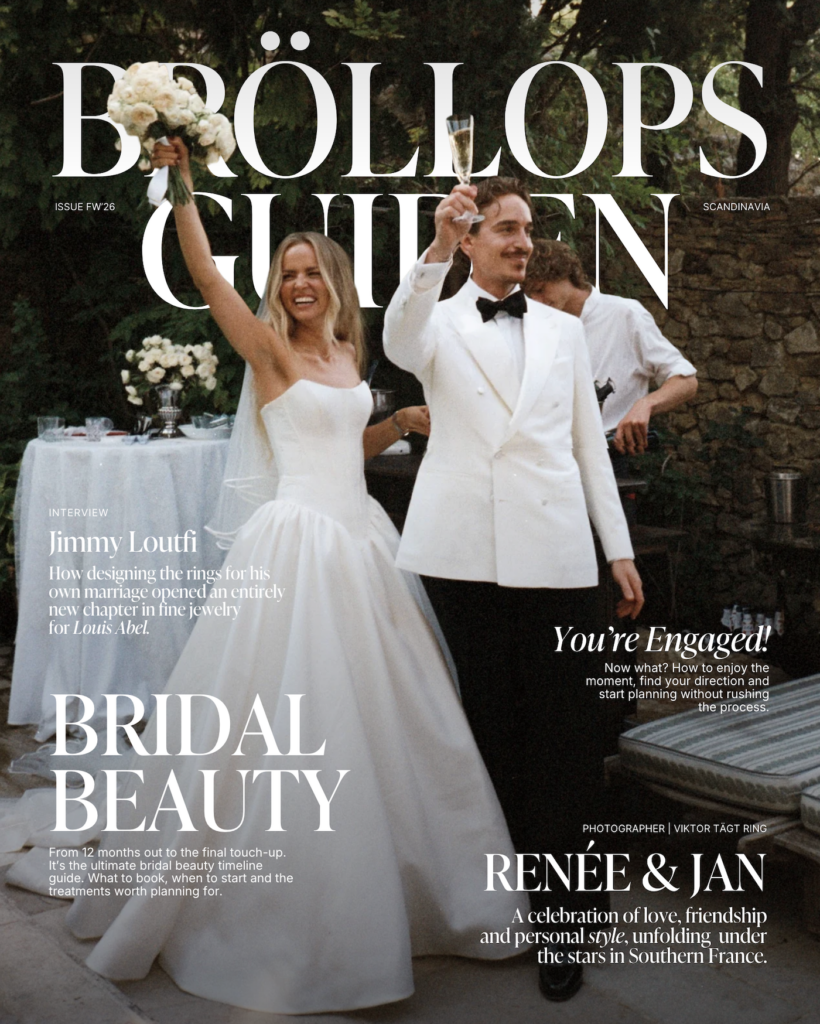
ISSUE FW’26
In our new FW’26 issue, we take you to the south of France and to Renée and Jan’s wedding, which was a celebration of love, friendship and style. We also sit down with Louis Abel founder Jimmy Loutfi for an in-depth interview about how his own wedding rings marked the start of a new chapter in fine jewellery, and look ahead to New York Bridal Fashion Week for the silhouettes, details and ideas that will set the tone for the coming season.
Wedding ceremony
Testing of gold content
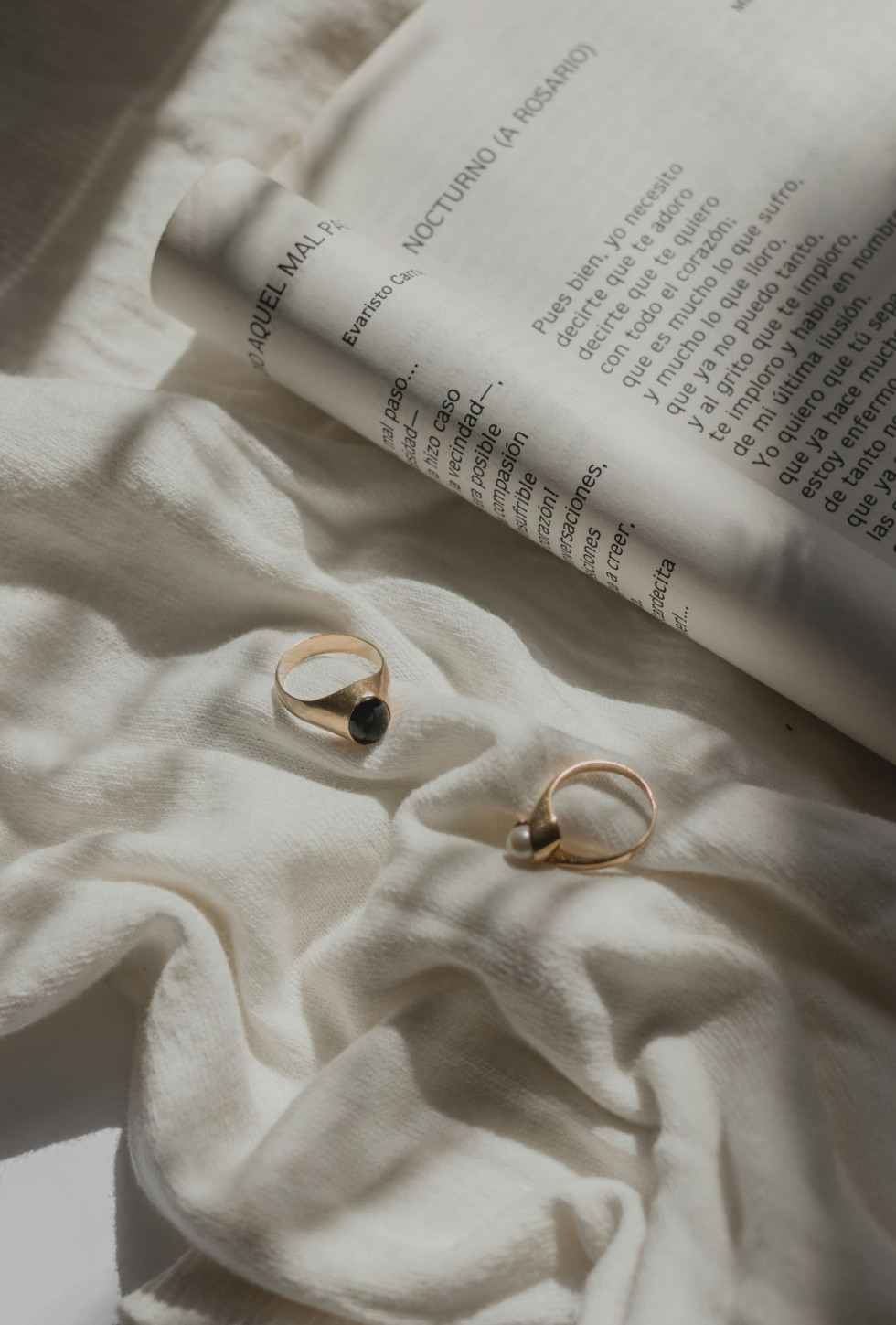


Checking the gold content of your old jewellery
It is becoming increasingly popular to recycle old gold into new jewellery; not least because it is a great way to recycle and help protect the environment. In this article, we’ve asked some questions of goldsmith Anders Fors, who runs Anders Fors Guldateljé.
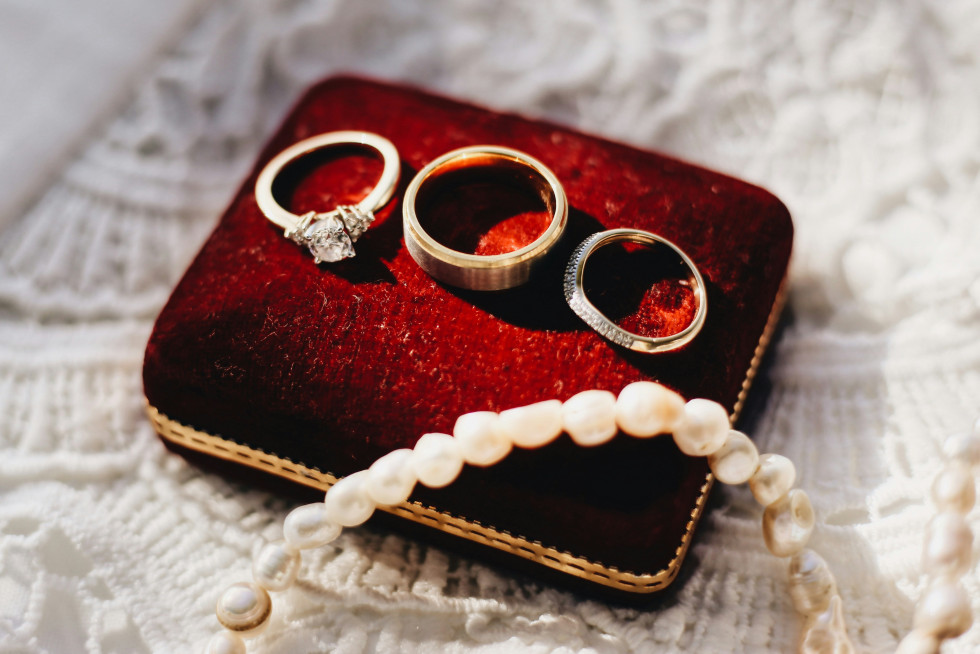
So what is in your old jewellery?
Checking the gold content of jewellery, watches and dental gold is particularly important today, as there isn’t always a hallmark, or it may not be accurate. The previously mandatory ‘cat’s paw’ hallmark is no longer a requirement. The price of gold is high, and there is a lot of privately imported jewellery, as well as heavy necklaces, which customers may think they’ve found a bargain on. However, behind these prices often lies everything from substandard and incorrectly hallmarked gold to melted-down stolen goods.
A goldsmith can test the composition and quality of your jewellery in various ways, including by using acids. As part of a drive to improve quality control, Anders has chosen to acquire an advanced piece of equipment known as an XRF spectrometer. They use it to check the metal content of jewellery they are remaking or where a customer wants to verify what the piece contains. This metal analyser displays all the different metals contained in the jewellery with an accuracy of two decimal places.
If a customer has old gold that she wants to have remade, it’s useful for me as a goldsmith to know the composition. Zinc, for example, isn’t ideal if you’re going to forge a piece of jewellery. If a customer has old jewellery with a high zinc content, it’s better to hand it in for an exchange, says Anders Fors.
Checking the gold content of a 23k ring
When I receive an old, plain 23-carat ring, as an experienced goldsmith I can tell straight away whether it is 18-carat or 23-carat. This alloy is rarely used today, as 23k gold is almost as soft as lead; in other words, a 23k ring deforms easily and is immediately unsuitable for use if you wish to have gemstones set in it.
Analysis results for the gold content of a 23-carat ring
Everything was in order; the plain 23k ring contains almost exclusively fine gold, with a small proportion of copper and traces of silver and palladium. If you have old 23k rings that you wish to rework into new jewellery, they are very well suited for alloying to the more practical 18k gold standard. In that case, I add a little silver and copper, so that the fineness is 75 per cent gold, approximately 17 per cent copper and around 8 per cent silver. This produces the Swedish red gold that dominates the jewellery manufactured in our country. In southern Europe, the gold is usually more yellow, due to a higher silver content and a lower copper content.
A customer has an old heel ring that they’d like to have remade
According to the hallmarks, this heel ring is 18-carat gold, but to be on the safe side I’m carrying out an analysis on the ring. Here you can see the heel ring being placed in the spectrometer, which also uses X-rays to analyse the metal content.
18-carat gold, content verified
Everything was fine; the gold content was 75.18 per cent, followed by silver and copper. The old gold from this heel ring poses no problem for use in the manufacture of a new piece of jewellery.
A worn old white gold ring is tested
Before 1980, nickel was often used when alloying white gold. In the early 1980s, the use of nickel was banned in the EU as it can cause allergies. The ring below is 18 carat, but also contains a small amount of nickel (2.36 per cent). Unfortunately, we now see many major e-commerce sites selling jewellery to Swedish consumers where the nickel content can be as high as 10 per cent. Our authorities do not seem to be concerned about this. Upon inspection, I have also found that websites which claim their jewellery is nickel-free do not live up to this promise, as I have discovered high levels of nickel during my checks.
Testing the nickel content of a solitaire ring
We place this single-stone ring on the instrument’s reading surface to check the gold content and any nickel content.
The analysis reveals a high nickel content
Nowadays, goldsmiths in Sweden use white gold with palladium instead of nickel. Palladium helps to give the gold its white colour. However, palladium is a very expensive precious metal, though it has advantages beyond its price. In this single-stone ring, it turned out that the nickel content was as high as 8.16 per cent and it contained no palladium. A piece of jewellery containing nickel is not suitable for remaking, but is very suitable for trade-in.
Business Directory
Do you need help finding suppliers for your wedding? Take a look at our business directory.
Related articles
-
 Wedding ceremony
Efva Attling
Efva Attling has been designing wedding and engagement rings for more than 20 years and, together with her expert team, she shares some useful information…
-
 Wedding ceremony
Circus wedding
Making their wedding as personal as possible is probably every couple’s dream. Jenny and Jon certainly succeeded: their wedding had a magical and exuberant circus…
-
 Wedding ceremony
Schalin’s Rings
Since 1944, Schalins has been crafting rings as a symbol of love for the people of Sweden. A great deal has happened since the company’s…
-
 Wedding ceremony
Garden wedding, on a budget
Simple, intimate weddings are often the most beautiful and memorable, and for Fanny and Michael, having their closest friends and family there was more important…
-
 Wedding ceremony
The Star Ring
How to upgrade your diamond.