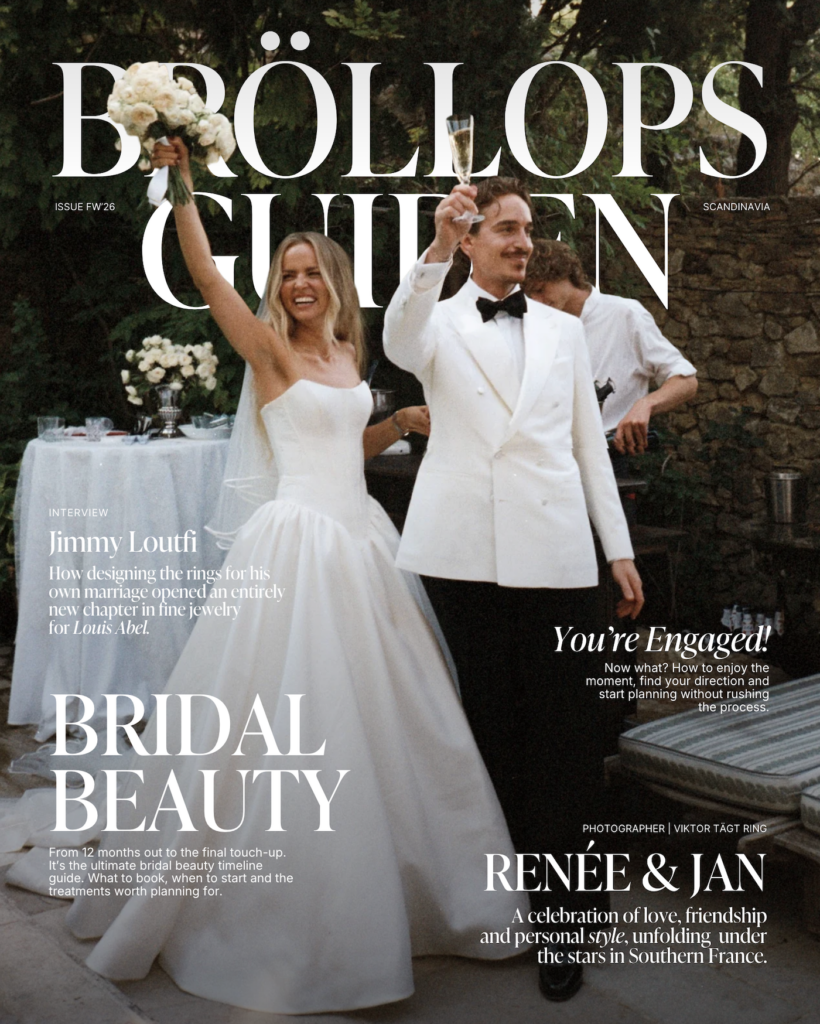
ISSUE FW’26
In our new FW’26 issue, we take you to the south of France and to Renée and Jan’s wedding, which was a celebration of love, friendship and style. We also sit down with Louis Abel founder Jimmy Loutfi for an in-depth interview about how his own wedding rings marked the start of a new chapter in fine jewellery, and look ahead to New York Bridal Fashion Week for the silhouettes, details and ideas that will set the tone for the coming season.
The wedding reception
The first dance
Glide across the dance floor to an elegant Viennese waltz, or dance a slow dance to your favourite song? It’s entirely up to you, of course, which you choose as your first dance.
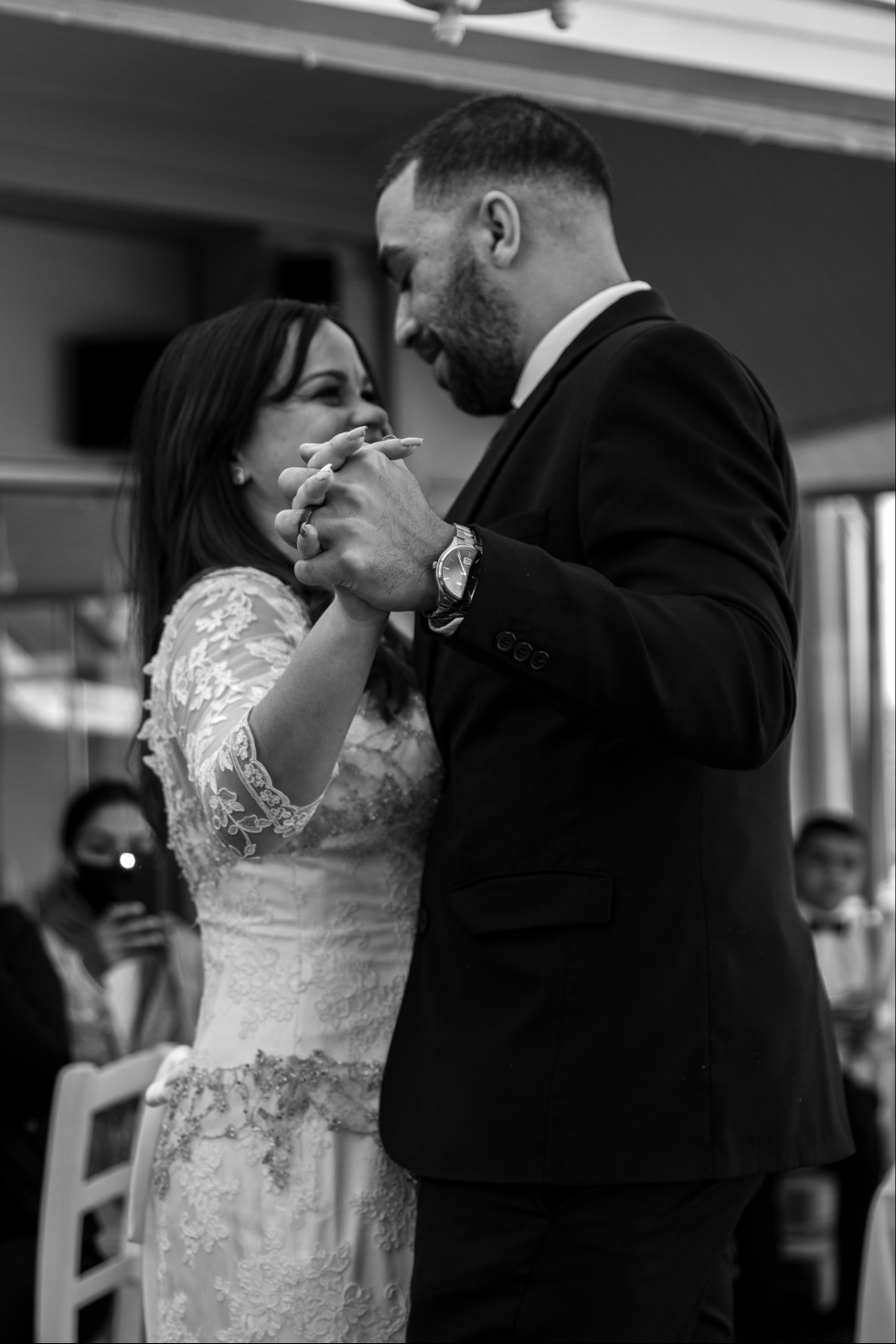


The first dance at the wedding reception
Glide across the dance floor to an elegant Viennese waltz or dance a slow jive to your favourite song? It’s entirely up to you, of course, what you choose for your first dance.
It is an old tradition for the bride and groom to dance the first dance together, and to have the dance floor to themselves, at least for half the dance. According to old custom, it should be a waltz, but it can of course be another dance as well – depending entirely on the bride and groom’s wishes. But most people like traditions – so it might be worth the effort to learn how to dance the Viennese waltz. After all, the Viennese waltz is also the dance that usually opens a large ball, and who knows what the future holds in terms of celebrations?
Alternative dance styles
The range of dance courses offered by dance schools can vary slightly. For example, there are weekend crash courses in the art of the Viennese waltz, but also other options with courses lasting a few weeks. The courses may also include other dances, such as the foxtrot or the tango. Most commonly, however, the bride and groom want to learn the Viennese waltz or the modern waltz. But there are also those who choose the foxtrot or the salsa, and the Argentine tango is now also popular.
The Viennese waltz
During the 19th century, the Austrian composer Johann Strauss the Younger composed several popular waltzes, such as ‘The Blue Danube’. The character of the Viennese waltz invites a sweeping glide across the dance floor in a billowing wedding gown. The waltz consists of right turns, left turns, forward steps and backward steps, and one full turn is completed in two steps.
The bridal waltz – an old tradition
Dancing is a common feature at weddings all over the world. The polka was the most common dance, known as the ‘Wedding Dance’, at peasant weddings in 18th-century Sweden, whilst the minuet was danced at bourgeois weddings. The waltz began to appear in the early 1800s. In the 1700s and 1800s, it was often the vicar, or alternatively the bride’s father, who opened the wedding dance with the bride; the groom was second. Nowadays, it is the bride and groom who open the dancing with their bridal waltz. Only then does the bride’s father dance with his daughter, whilst the groom dances with the bride’s mother. (However, there is nothing to stop the bride and groom from choosing a different dance instead of the waltz.)
Suggested music
On the Beautiful Blue Danube – Johann Strauss Jr
. Bridal Waltz – E. Taube
The Dream of Elin – P. Himmelstrand
Birthday Waltz for Mona – B. Ulvaeus / B. Andersson
Kaiserwalzer – Johann Strauss Jr.
Book your dance lesson
Do you need help finding suppliers for your wedding? Take a look at our business directory.
Related articles
-
 The wedding reception
Learn to dance the wedding waltz
Learn to dance the wedding waltz: an interview with Tony Irving. The bridal waltz is a tradition found all over the world and, according to…
-
 The wedding reception
3 drinks – recipes
Here you’ll find three different types of wedding drinks, complete with recipes.
-
 The wedding reception
Wedding Cake of the Year 2021 – recipes and tips
A wedding cake developed by the Swedish National Pastry Team, drawing inspiration from classic Swedish flavours as its main ingredients. The cake should be able…
-
 The wedding reception
Champagne Tower
Kick off the wedding reception with a glass tower of champagne – an elegant and sociable icebreaker that brings guests together and creates a festive…
-
 The wedding reception
My Perfect Day
It’s no secret that it’s the guests who make the party. However, the vast majority of people want to add that extra special touch to…