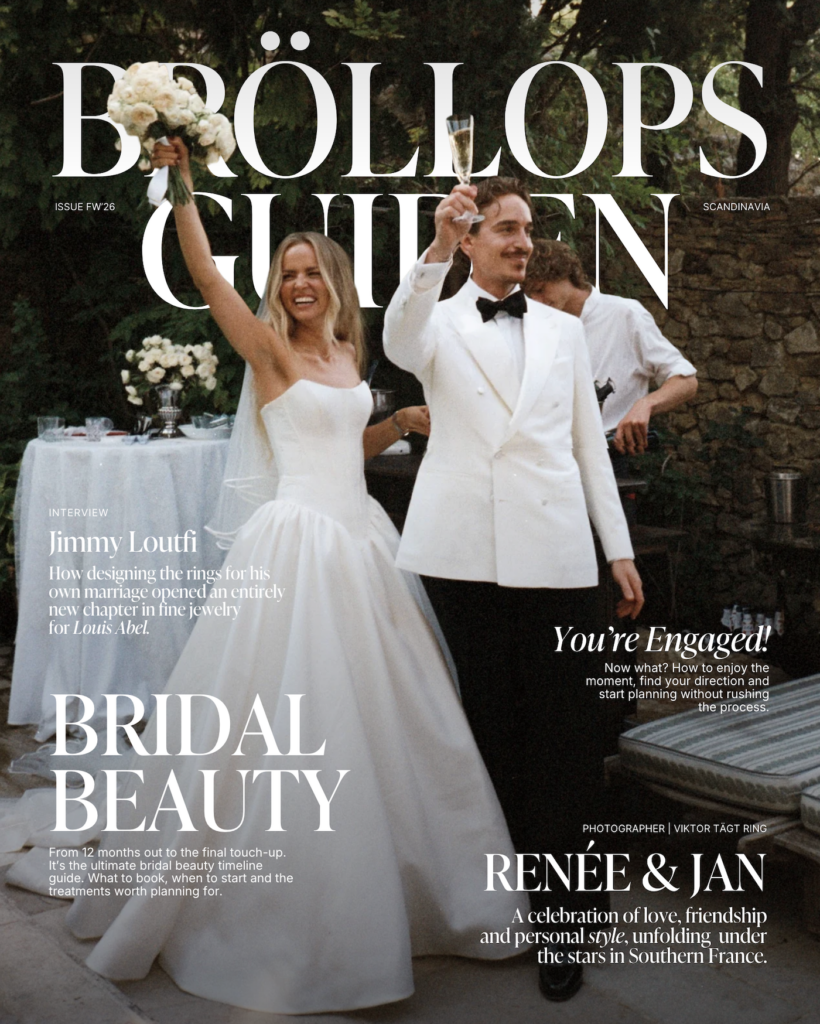
ISSUE FW’26
In our new FW’26 issue, we take you to the south of France and to Renée and Jan’s wedding, which was a celebration of love, friendship and style. We also sit down with Louis Abel founder Jimmy Loutfi for an in-depth interview about how his own wedding rings marked the start of a new chapter in fine jewellery, and look ahead to New York Bridal Fashion Week for the silhouettes, details and ideas that will set the tone for the coming season.
Planning
Wedding Glossary
There are many customs and traditions associated with weddings. Most date back a long way, whilst others have emerged in recent years.


Wedding Glossary A–Z
There are many traditions and customs associated with weddings. Most date back a long way, whilst others have emerged in recent years. Here you can read about the most common ones and those you need to be aware of – and create your own personalised wedding by following the traditions you wish to observe.
Best man
An Anglo-Saxon tradition that is starting to catch on in Sweden. Usually, the groom’s closest friend or brother is chosen for this role. His role is to stand by the groom’s side in the church whilst he waits for his bride, to keep track of the ring(s) and to present it to the groom at the right moment. He also acts as the groom’s support in general. He is usually responsible for organising the stag do, if one is held.
Civil ceremony
is conducted by a qualified judge in a district court or by a person appointed as an officiant by the county administrative board. A legally binding ceremony without religious elements. Two witnesses are required. Often takes place in a simple manner. A civil ceremony became available to everyone in 1908.
Bridal bouquet
A bouquet carried by the bride during the wedding ceremony. It first came into use in the mid-19th century. Originally small, they grew larger over time. In recent years, increasingly elaborate arrangements have become popular. Traditionally, it is the groom’s responsibility to choose and buy the bridal bouquet for his bride. Traditionally, white flowers were most commonly used as the colour white symbolises purity; nowadays, it is more common for the bouquet to include coloured flowers.
Bridal chest
The bride collects items and valuables in a special chest for her new home. This custom dates back a very long time. Originally, the bridal chest was part of the dowry.
Bridal crown
The crown, a golden one, was in earlier times perhaps the most important detail of the bride’s attire. The crown was lent by the church for the ‘garb of chaste brides’, and it symbolised the bride’s purity and virtue. The crown thus became a symbol of the entire wedding. In the early 19th century, the metal crown fell out of fashion and was replaced, among the upper classes, by myrtle wreaths. Among the common people, brass crowns, artificial flowers and decorations were used, and the crowns were adorned with sprigs, bouquets of flowers and variegated leaves. In the 20th century, bridal crowns became more delicate and were made of silver; today, it is less common for the bride to wear a crown. However, there is a noticeable trend towards a resurgence in interest in the crown.
Bride purchase
Marriage was arranged by the man purchasing a bride from her ‘giftoman’, her father. The terms of the purchase were set out in an agreement between the prospective husband and the father. This practice was common in Sweden until around 800 AD.
Bride price
The word ‘bröllop’ (wedding) derives from this term. It was a concept that existed in the period before church weddings, when the father officiated at the marriage and handed his daughter over to the groom. After the ceremony, which took place at the bride’s home, the party would hasten to the groom’s home where the wedding feast was held. The journey, which was considered dangerous, was called the ‘brudlopp’
Flower girl
two or more smartly dressed children, aged 4–8, who walk in front of the bride and groom as they enter the church. A symbol of the cycle of life.
Viewing of the bride
the public gazes upon the bride and the bridal couple. Among the city’s upper classes, up until the 1870s, the bride’s parental home was opened before the wedding ceremony, first to representatives of the court and subsequently to the people in the street. The bride had to endure critical comments from the onlookers as they filed past her and her retinue. Before the mid-19th century, the common people in the countryside viewed the bride and groom in the church during High Mass. In many places, the bride and groom would stand on a large stone on the church hill, known as the ‘hot stone’. Once the wedding ceremony had been moved to the family home or the vicarage, it was not quite so easy to catch a glimpse of the bride or the couple. In the evening, the young people would then set off for the wedding venue to ‘call out’ the bride and groom. It was also customary to fire a salute for the bride and groom, which would draw people from all directions. Those who came to see the bride were usually offered a drink and some food from the wedding table. Today, the tradition of ‘brudskådningen’ lives on in the form of the wedding photographs we see in the family pages of newspapers or in wedding photos in photographers’ shop windows
The bridal toast
The first toast made when the bride and groom arrive at the reception and all the guests have gathered. Everyone usually shouts ‘A toast to the bride and groom!’ and raises their glasses whilst looking at the couple. The bridal toast may also be made during the dinner, after the welcome speech. Traditionally, genuine Champagne or sparkling wine is served.
Photography
Ever since the invention of the camera, wedding photography has been an important part of the wedding day. After all, the photographs are the most important memento, so the bride and groom should take particular care in choosing a good photographer.
The ‘bride’s alms-round’
A begging procession for poor brides. Brides-to-be or newlyweds, dressed in their finest, sought contributions towards setting up home by going round the farms and, with the help of a quick-witted companion, asking for a gift for their new home. Many poor young people received a substantial contribution towards their new home in this way. The custom flourished during the 17th and 18th centuries and ceased in the mid-19th century.
Engagement
A successor to betrothal. Takes place the moment a couple have decided to marry. It is an informal promise of marriage in which rings are usually exchanged. Unlike betrothal, engagement has no legal significance. The time between the proposal and the wedding varies greatly. Nowadays, it is not uncommon for couples to become engaged without any plans to marry.
Giving away the bride
An English custom in which the bride’s father leads his daughter to the altar, where the groom is waiting. Bridesmaids and groomsmen follow behind the bride and her father. Upon reaching the altar, the father hands his daughter over to the groom and then goes to sit beside his wife.
Dowry
the bride brings a collection of items and possessions to her new home. The custom has its roots in the Middle Ages (when it was known as ‘hemföljd’ and was agreed between the groom and the bride’s father) and continued well into the 19th century. The tradition of gathering items in a special chest – the bridal chest – has survived to the present day.
Examination of impediments to marriage
A check to ensure there are no legal impediments to marriage. The application must be made to the local tax office no later than one week before the wedding. They issue a certificate which is valid for four months.
Invitation
The style and tone of the wedding invitation reflect the type of wedding the couple have in mind. Invitations are sent out six to eight weeks before the wedding, with a RSVP deadline of one to two weeks before the wedding. Essential information on the invitation includes the date, time and venue of the wedding ceremony and the reception/dinner, as well as the dress code.
Church wedding
A legally binding ceremony in a church with religious significance. The ceremony comprises several key elements: a hymn of praise, opening words, a Bible reading, a prayer over the ring(s), intercessions, the Lord’s Prayer and the blessing. Hymn singing is usually included, and in addition to this, the bride and groom may choose to have someone sing or play music. It was with the Act of 1734 that church weddings became fully legal; previously, they had often taken place in the bride’s home without the presence of a priest. The 17thand 1700s were the heyday of traditional peasant weddings, and during the 1800s, church weddings declined once more as the upper classes had adopted the practice of home weddings, which then spread to the better-off sections of the peasantry. However, church weddings soon became very popular again, and were now celebrated as a more grand ceremony. Church weddings are still the most common.
Church usher
the person who guides the wedding guests to their places in the church. May be the same person as the groomsman.
Announcement
the forthcoming marriage is announced in church, a custom that is now optional and less common. It dates back to the 13th century. Under the Act of 1734, the banns became linked to a church wedding. The banns were proclaimed from the pulpit on three consecutive Sundays, and during that time anyone aware of any impediment to the marriage was required to come forward. It was a kind of public examination of impediments to marriage. There were many traditions surrounding the banns; for example, it was said that the couple had ‘fallen from the pulpit’ at the first reading of the banns. Friends would present the couple with a walking stick and a crutch, and they were treated to schnapps, coffee and biscuits. The custom of betrothal visits and betrothal parties dates back to the late 19th century in middle-class circles and subsequently spread further afield. The engaged couple sent out so-called engagement cards, and eventually announcements were placed in the daily press to ensure that friends were aware of the engagement reception. Today, an engagement usually involves an engagement reception where, for example, it may be convenient to present wedding gifts.
Groomsman
the male counterpart to the bridesmaids. They walk in pairs with the bridesmaids behind the bride and groom as they enter the church. The groomsman walks behind the groom and the bridesmaid behind the bride.
Morning gift
a token of honour from the groom to the bride on the morning after the wedding. Nowadays, both give gifts to each other. It has roots stretching far back in time. It was not voluntary but statutory, and was abolished under Swedish law in 1920. It is likely that the morning gift was originally a reward for the woman’s virginity. Today, the gift has a romantic significance; it is often a beautiful piece of jewellery or some other personal item.
Hen do
A farewell party for the bride-to-be. It dates back to the so-called ‘mökvällar’ (maiden’s evenings) of the 16th century. These were organised by the bride’s parents for relatives and friends at the wedding venue the evening before the wedding. By the late 19th century, the event had become a party attended exclusively by women. The word ‘hippa’ emerged at the turn of the century. It means ‘a festive occasion, a party where alcoholic drinks are the main form of refreshment’. The modern hen do began to take shape around the turn of the century when emancipated women’s groups, such as female students and female artists, began to celebrate, as friends, by gathering at one of the girls’ homes or in a restaurant. Characteristic features of hen dos, now as then, are that the bride is to be taken by surprise, and that the participants are usually in fancy dress – for example, in costumes parodying a wedding or alluding to the carefree single life that the bride is about to leave behind. It is also common for the friends to organise various pranks for the bride. Out of consideration for the bride and groom, hen dos are now usually held a few weeks before the wedding.
Night courtship
a custom from the 18th- and 19th-century rural communities of northern Sweden. Young men would gather and wander around the farmsteads in the evenings, settling down on the edge of the girls’ beds. After a while, the group would move on, leaving one bedmate with each girl. It was usually all very innocent and accepted by the elders.
A splendid bride
In the early 19th century, weddings were often held on Fridays or Saturdays, either at the vicarage or at the bride’s home. To ensure that the newlyweds could still be seen by the public, it was customary for them, on the Sunday following the wedding, to be the last to enter the church and walk slowly up the central aisle, she on the left and he on the right. He opened the door of her pew and then went and sat amongst the other men. After the service, he rose before the others, went to fetch her, and then they were the first to leave. It was a kind of public demonstration of the couple’s changed roles and a way for them to show themselves off in their finest attire.
Stag do
the male equivalent of a hen do. The word ‘sven’ comes from ‘Svenkvällen’ – on the same evening as the hen party, the groom appears to have had a farewell party at his home. The word ‘sexa’ refers to a light meal served around six o’clock in the evening in the early 19th century. The modern stag do developed in the mid-19th century within middle-class circles. It was now the groom’s friends who hosted the party, initially in academic and military circles. There was a strong sense of camaraderie here, and it was natural to celebrate together when someone left bachelorhood behind. Even back then, the festivities centred largely on drinking oneself more or less senseless and managing to embarrass the groom. By the 1920s, the custom had spread across the country and is one of the traditions that has survived into modern times, despite the decline of traditional norms surrounding marriage.
Thank-you cards
The bride and groom write to thank the guests who attended the wedding for their presence and for their gifts. A photograph of the bride and groom is usually enclosed. Guests write one week after the wedding to thank the hosts/bride and groom for allowing them to attend the wedding.
Betrothal vow
A marriage promise, in which the woman and man, in the presence of witnesses, joined hands and pledged to fulfil the terms of the marriage agreement (money and gifts), was very important in earlier times. It was even regarded as constituting the marriage, and children born of such a union were entitled to an inheritance. The legal provisions were abolished in 1915.
Toastmaster
A person who, during the wedding dinner, coordinates the speeches and proposes toasts with the guests. He or she draws up a list of speakers and introduces them in the appropriate order and at the appropriate time during the dinner. Ensures that guests receive their welcome drink and also notes down who wishes to give a speech during the dinner. Also reads out any telegrams received and leads any sing-alongs.
Bridesmaid
is usually a younger woman, often the bride’s sister or a close friend, who assists the bride with all the arrangements and tasks on the wedding day, such as getting dressed. Traditionally, the bridesmaids help with the bride’s attire and related matters. She follows the bride and groom into the church, together with the groomsman, if there is one. Her role during the ceremony includes holding the bridal bouquet. She often organises the hen do, if there is one. Bridesmaids are usually unmarried.
Wedding ring
A ring given to the woman at the wedding ceremony, which is worn on the left ring finger alongside the engagement ring. Sometimes the man also receives a ring at the ceremony; that is, the couple exchange rings just as they did at the engagement. Other variations may also occur.
Wish list
The bride and groom draw up a list of the presents they would like. The list is then handed over to the hosts for them to pass on to the guests. The wedding list can also be placed in a department store or online, where guests can tick off the present they have bought to avoid duplicates.
Business directory
Do you need help finding suppliers for the wedding? Have a look at our business directory.
Related articles
-
 Planning
How to cope with financial stress as a couple.
How to cope with financial stress as a couple.
-
 Planning
5 tips for planning a more sustainable wedding
Organising an eco-friendly wedding is a lovely way to both celebrate love and show care for the planet. Here are a few simple steps to…
-
 Planning
Meet the wedding coordinator Weddings by Felicia in Barcelona
Felicia was born and raised in Umeå but moved to Barcelona almost 10 years ago. Even as a child, she dreamt of one day working…
-
 Planning
Top tips for before and after the wedding
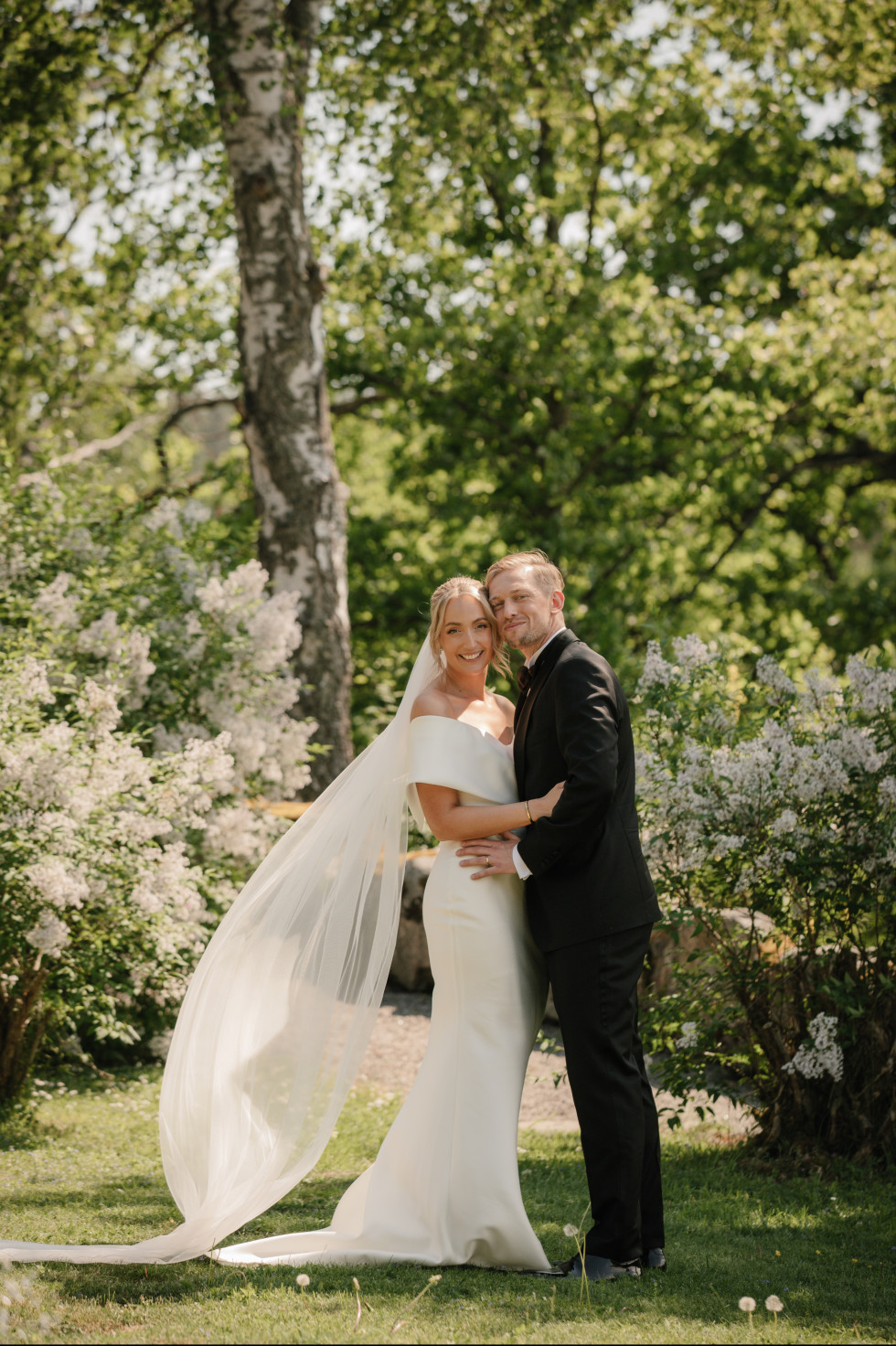
Here, Malin and Oscar – who got married in 2024 – have shared their top tips for planning a wedding!
-
 Planning
Lilly’s Delight: High-end wedding planners
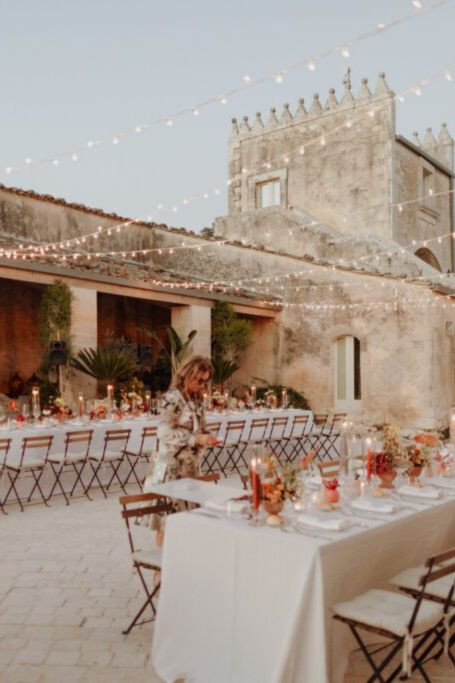
The experts answer your questions. Where do you start when planning a wedding? What is the first thing you should do? How long does it…