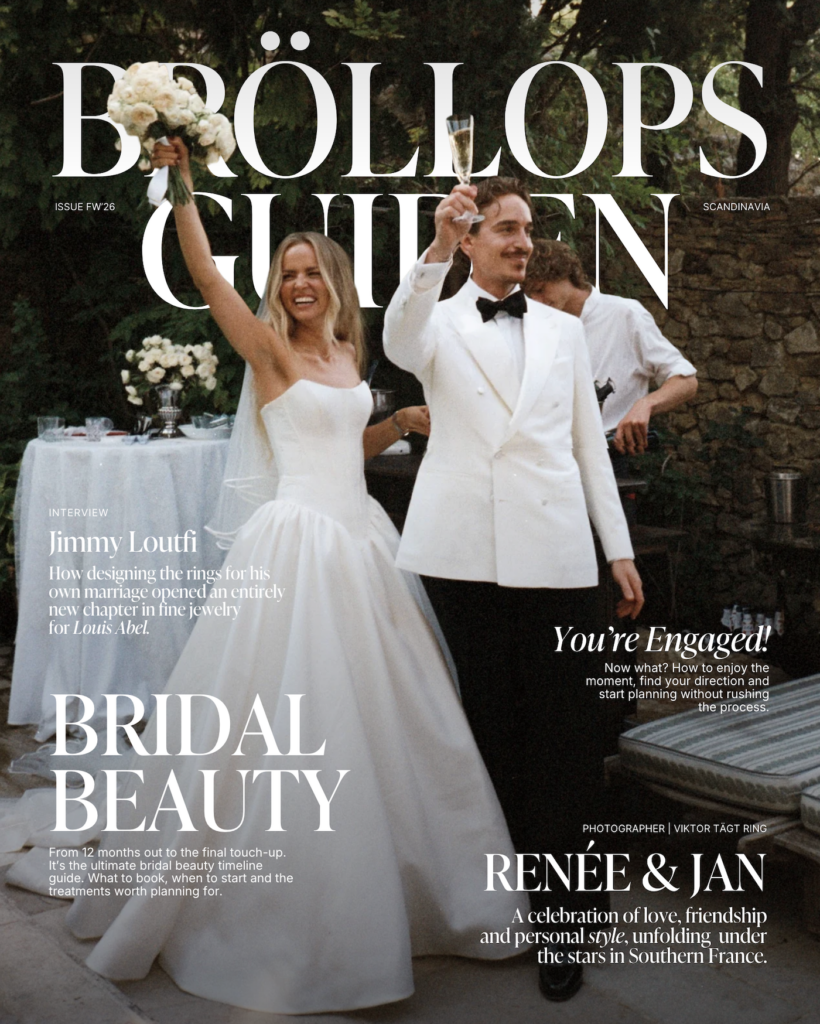
ISSUE FW’26
In our new FW’26 issue, we take you to the south of France and to Renée and Jan’s wedding, which was a celebration of love, friendship and style. We also sit down with Louis Abel founder Jimmy Loutfi for an in-depth interview about how his own wedding rings marked the start of a new chapter in fine jewellery, and look ahead to New York Bridal Fashion Week for the silhouettes, details and ideas that will set the tone for the coming season.
Etiquette
Wedding etiquette: Everything for guests and the bride and groom
Get to grips with wedding etiquette! Whether you’re a wedding guest or the bride and groom, here you’ll find rules and tips for a successful wedding day.
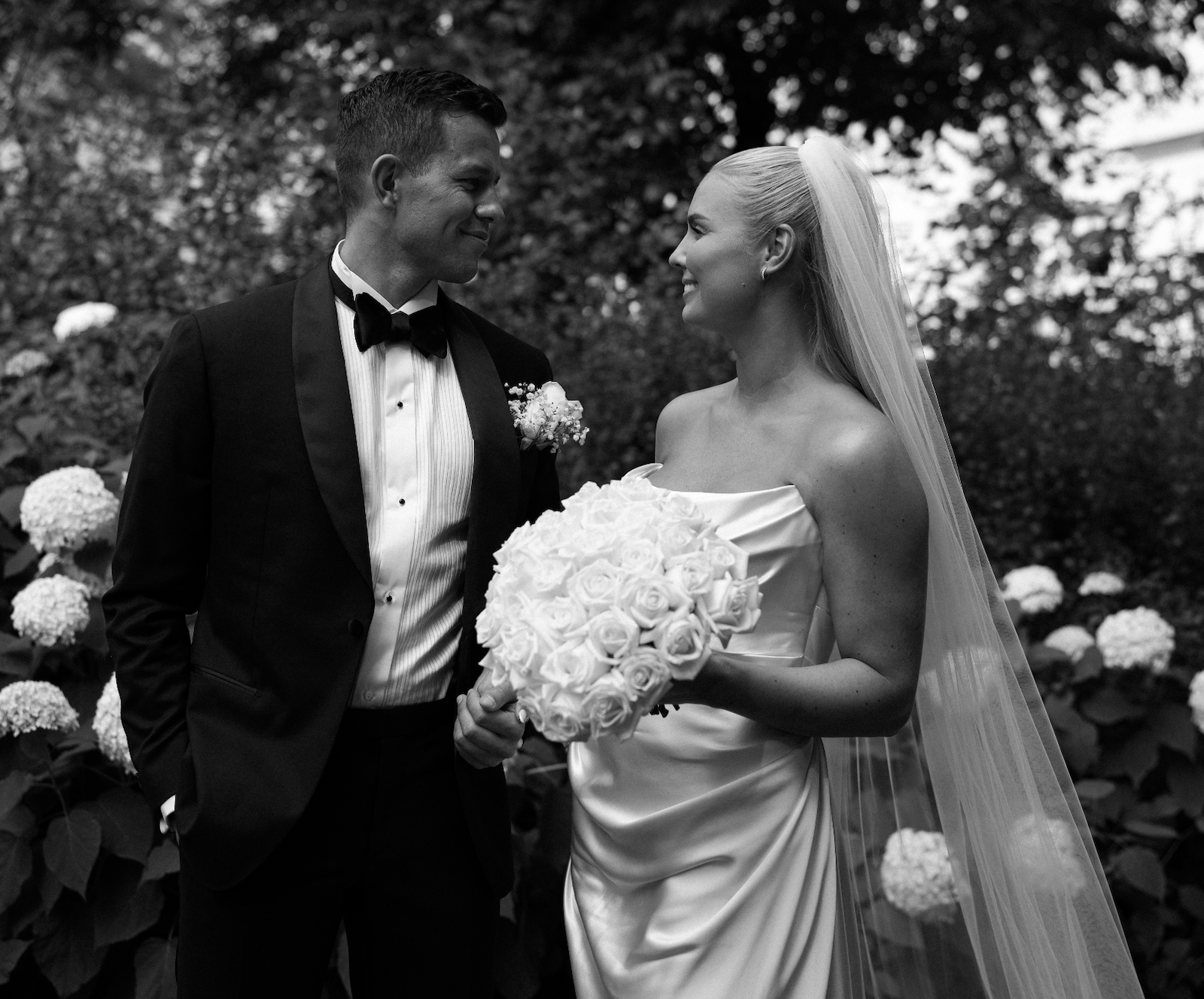


Wedding etiquette. Have you received a wedding invitation, or are you getting married? If so, it might be a good idea to read up on the ‘rules’ that apply at a wedding – in other words, etiquette.
Seating arrangements and table etiquette
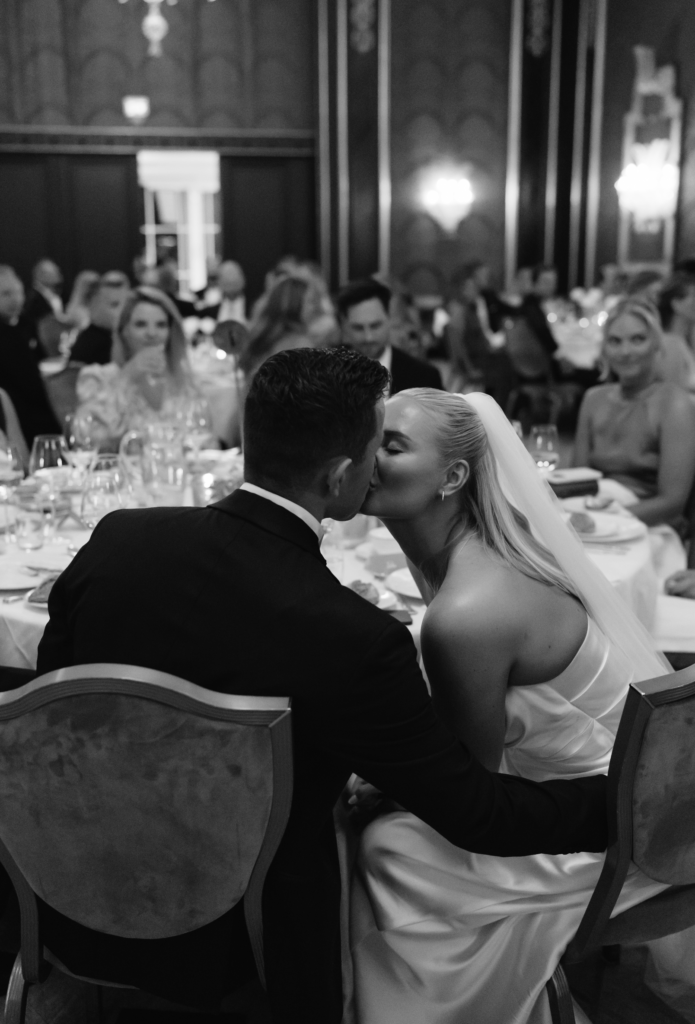
When it comes to seating arrangements, there are clear rules of wedding etiquette regarding how the head table should be arranged. The bride and groom sit together, with the bride to the groom’s right. The bride has her father on her right. The bride’s father has the groom’s mother seated to his right. The groom has the bride’s mother on his left. The bride’s mother has the groom’s father seated next to her. Engaged couples sit together, as do bridesmaids and groomsmen. Married couples and cohabiting couples sit separately.
Traditions surrounding the wedding cake
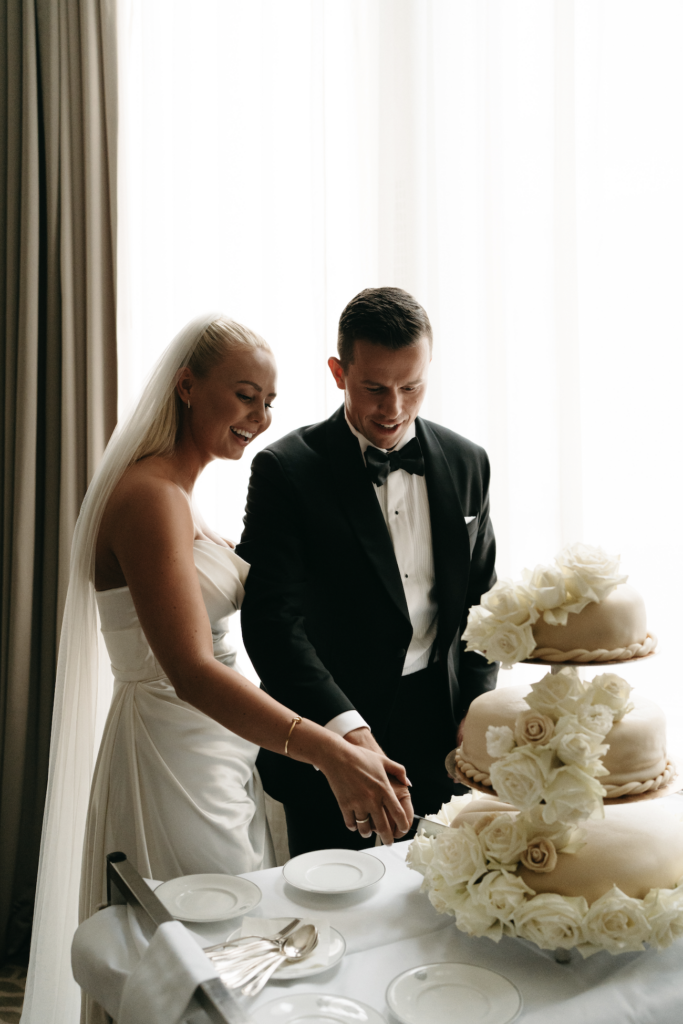
The wedding cake is cut first by the bride and groom. Together, they cut a shared slice from the top tier. If the cake is square, they cut it in the middle of the long side. The bride holds the cake server in her right hand and the groom places his hand on top of hers.
She then places her left hand on top of his, and they cut the cake together. Afterwards, the bride and groom may each cut a slice for their respective mothers. Etiquette dictates that the closest relatives then take a slice of the cake, specifically the top tier of a tiered cake.
Wedding cake recipe for 35–40 people
Wedding waltz and first dance
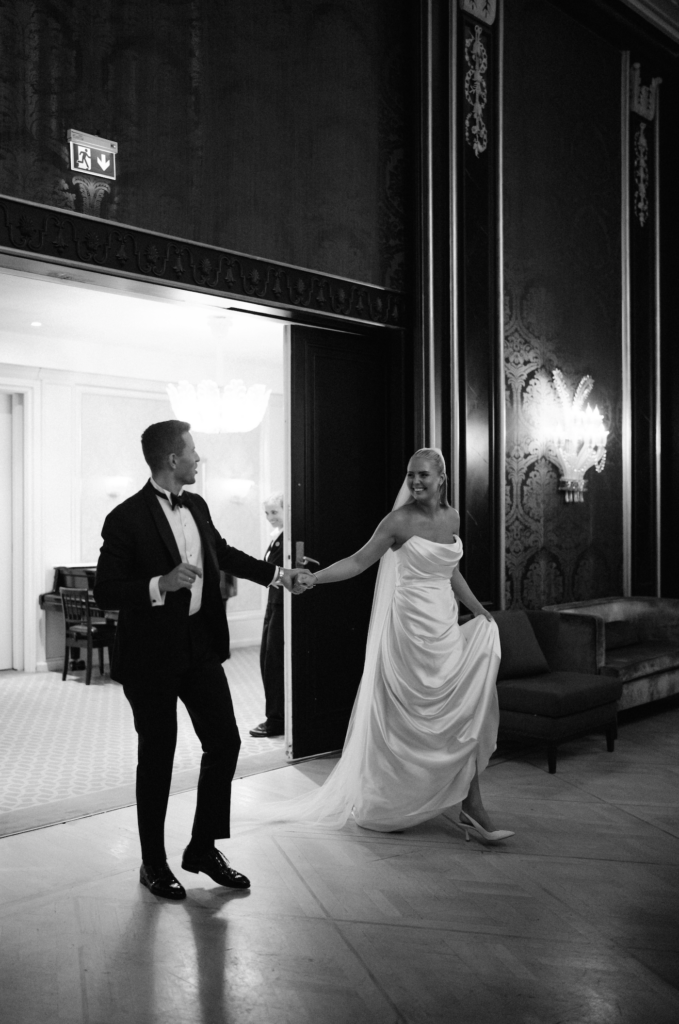
The bridal waltz is for the bride and groom. The bride and groom do not have to dance the entire waltz alone at the end; their parents may join them, followed by the other guests. The head of the table dances first with his table partner, and before the evening is over, he must have danced with the bride.
Guest list
Established couples should always be invited together. It is neither possible nor appropriate to invite only one person in a couple to your wedding, even if you have never met the other.
Classic wedding etiquette for guests
Dress code and attire at weddings
When it comes to attire, wedding etiquette is clear: always follow the dress code specified on the invitation to show respect for the bride and groom. Modern weddings are often not bound by older etiquette. Guests are not expected to wear traditional wedding attire, even if the bride and groom are dressed in formal wear. Instead, the dress code specified on the invitation means the following:
Tailcoat: For men, this always means a tailcoat. It is important that the bow tie and waistcoat are white when wearing a tailcoat to a wedding. Women should wear a long, elegant evening gown; a low-cut neckline is perfectly acceptable here. Long gloves are recommended with a bare-shouldered gown. Festive, glittery accessories are a must.
Traditional costume in its festive version: Suitable attire for all major celebrations and weddings where a tailcoat or formal attire is required. Worn by both ladies and gentlemen.
Formal attire: The man wears a tailcoat, uniform or festive version of traditional costume. The woman wears an elegant evening gown or the festive version of traditional costume.
No dress code specified: This actually implies a tailcoat, but as this tradition is not universally known today, it is wise to check with the hosts to find out what is expected.
Jacket: Traditionally, this means a dark suit for men, but the rules have become more relaxed. A light-coloured suit is appropriate during the lighter months of the year; occasionally, a mismatched jacket and trousers are acceptable, provided they are worn with smart accessories. Ladies wear a short dress or a traditional costume, and on occasion a pair of elegant trousers is acceptable. An evening gown, even a long one, may be worn when you know that the male guests are expected to wear a dark suit (at an afternoon wedding).
Dark suit: This always means a dark blue or dark grey suit. Ladies wear a more elegant short dress or, on occasion, a long dress (for afternoon weddings).
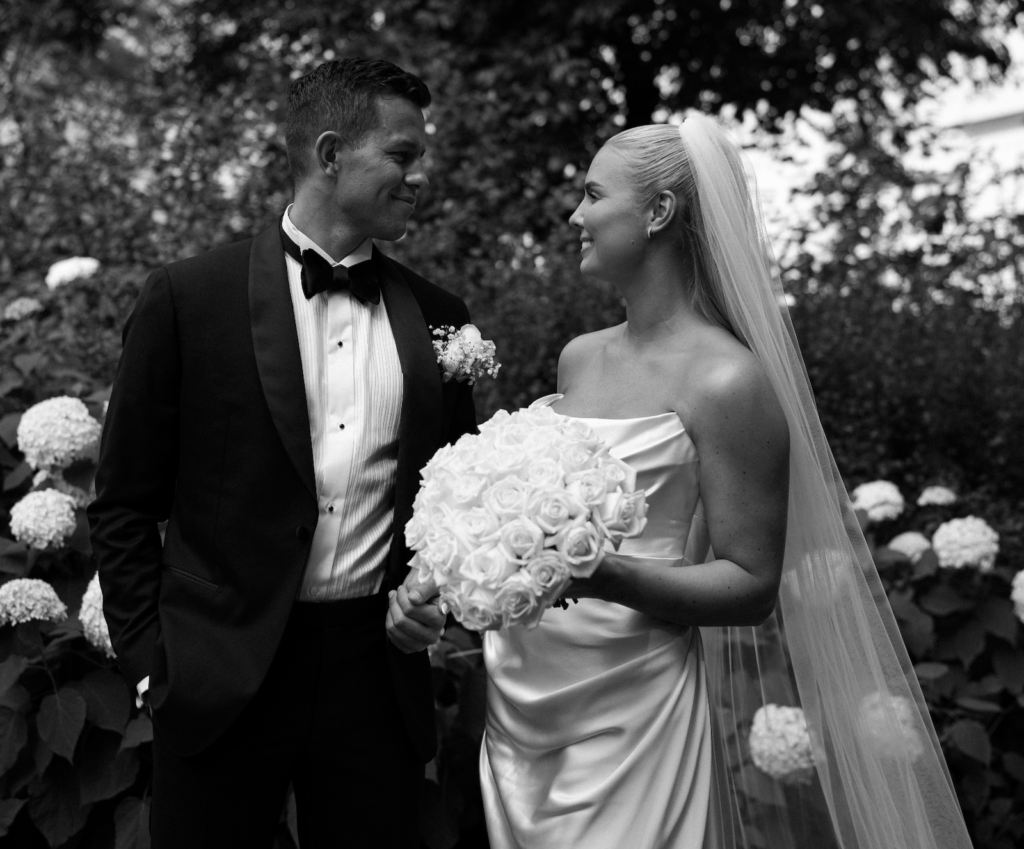
Tuxedo: An old rule states that a tuxedo is not worn to weddings, but this rule is beginning to fade to some extent. If the invitation specifies ‘tuxedo’, a tuxedo must be worn; otherwise, it is not required. It does not replace a tailcoat or a suit. For women, tuxedo attire consists of an evening gown, long or short, strapless or long-sleeved.
Interpreting dress codes correctly is a key part of wedding etiquette. If you’re unsure what ‘dark suit’ actually means, you can read more about the various wedding dress codes here.
Things to bear in mind:
Here we’ve summarised the most important points regarding wedding etiquette so that you can feel completely at ease.
- It is customary for the bride and groom’s parents to dress in the same way as the guests.
- If the bride and groom are dressed formally, it is common for the bridal party (bridesmaids, groomsmen, best man and maid of honour) to be as well.
- However, proper etiquette dictates that the bridal party should dress in the same way as the guests. So there is plenty of freedom of choice here.
- Bridesmaids do not wear white – they must not outshine the bride.
- The flower girls (the children) wear smart clothes.
- A rule for female guests is not to wear white or all black.
- In church, shoulders should never be bare. Wear a shawl or a light jacket.
More about wedding dress codes
R.S.V.P. – please reply
Wedding invitations should be replied to in the same way they were sent; if an address is provided for the parents (the hosts), write to them before the date specified. If a telephone number is provided, it is fine to ring, etc. If you receive an invitation to the church service only, you should not reply or send a thank-you card.
Order of speeches and etiquette at the wedding dinner
Keeping track of the order of speeches is a key part of wedding etiquette, as it provides a common thread running through the entire dinner. At the wedding dinner, the bride’s father gives the welcome speech (if he and the bride’s mother are the hosts). If both sets of parents are hosting, this speech may be given jointly by the bride’s and groom’s fathers. The mothers may also take part. Shortly afterwards, the bride’s father gives a speech to his daughter. Next, the groom’s father speaks. Then the vicar speaks, followed by close elderly relatives and siblings.
After that, it is the turn of the bridesmaids and the groomsmen, followed by younger relatives, employers and work colleagues. The final speech is the thank-you speech, delivered by the hostess’s table companion – often the groom’s father at a wedding. All speeches conclude with a toast to the bride and groom. A speech should last no more than 3–4 minutes, and all speeches must always be introduced by the toastmaster.
More on giving speeches at weddings
Church weddings – how it works
In the church, the bride’s family and friends sit on the left and the groom’s on the right. The closest relatives sit at the front. At the start of the ceremony, the parents enter last, before the bride and groom, who enter when the wedding march begins.
The bride walks on the groom’s left-hand side. If the bride is escorted in by her father, she walks on his right-hand side. The groom then stands waiting at the altar together with his best man. After the ceremony, the witnesses leave before the bride and groom, followed by the guests in the customary order.
More about the wedding ceremony
The hosts
The hosts, that is, those who invite guests to the wedding (according to old tradition, the bride’s parents), have the primary task of ensuring the celebration is a success. They should create a good atmosphere and make the whole event enjoyable. At larger weddings, the hosting duties may be shared with an additional host couple who assist the hosts with all the arrangements.
By following these simple rules of wedding etiquette, you’ll ensure that the focus remains on what matters most – celebrating love together.
Remember that wedding etiquette is fundamentally about everyone feeling at ease and having an unforgettable day together.
Related articles
-
 Planning
Getting married – 3 women talk about wedding planning and the ceremony
When you’re getting married, there are so many choices to make, and you’re bombarded with opinions from family and friends about the wedding. Listen to…
-
 Planning
Valentine’s Day menu
Here’s a lovely Valentine’s Day menu that you can cook together with your partner – it smells and tastes of romance. Recipes for a starter,…
-
 Planning
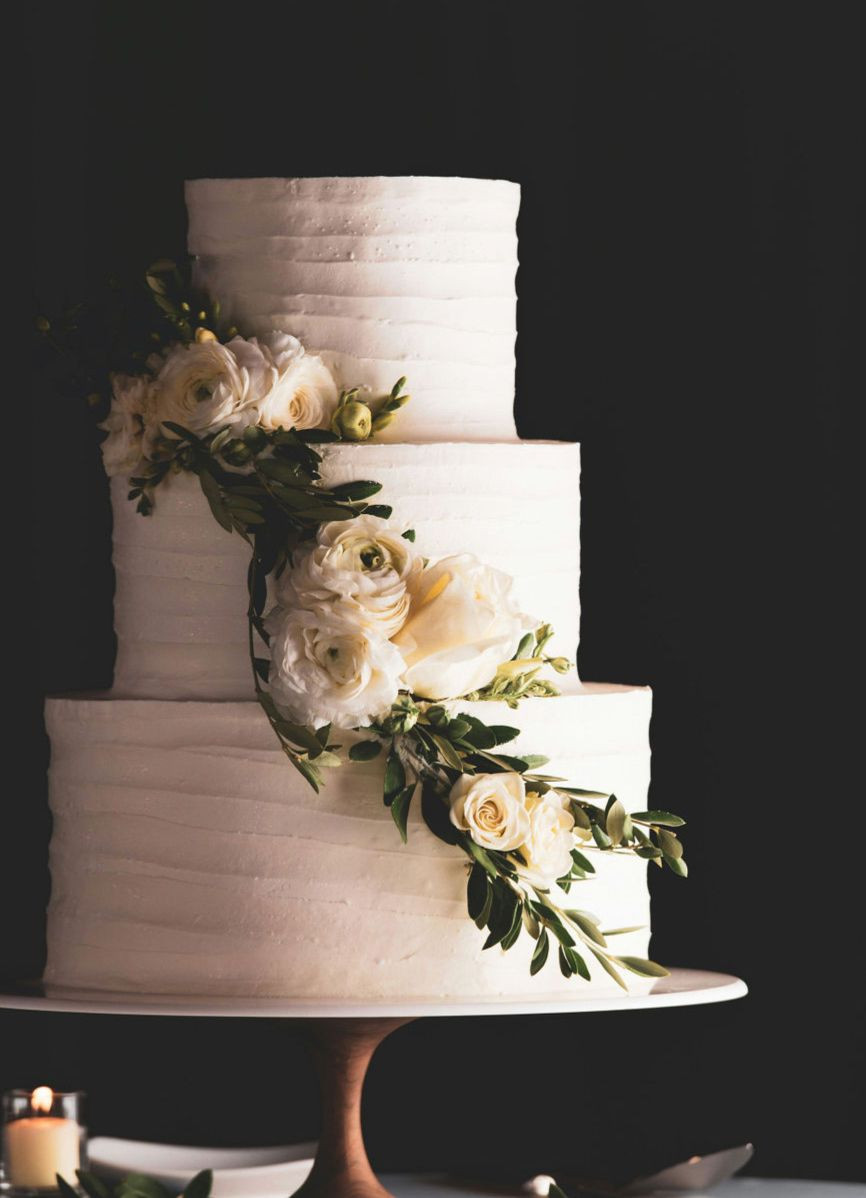
Wedding cake
Josefin bakes imaginative and delicious cakes and pastries for private customers and businesses looking for something special for a birthday, wedding or party.
-
 Planning
Quote: Religion
Are you looking for inspiring religious quotes? Here you’ll find a selection of biblical sayings, including the beautiful promise from Ruth: ‘Where you go, I…
-
 Planning
Quote: Weddings & marriage
Beautiful and amusing quotes about weddings and marriage to use in wedding programmes, reception programmes or speeches. Be inspired by words of love.