ISSUE FW’26
In our new FW’26 issue, we take you to the south of France and to Renée and Jan’s wedding, which was a celebration of love, friendship and style. We also sit down with Louis Abel founder Jimmy Loutfi for an in-depth interview about how his own wedding rings marked the start of a new chapter in fine jewellery, and look ahead to New York Bridal Fashion Week for the silhouettes, details and ideas that will set the tone for the coming season.
Guests
Seating arrangements at a wedding
Get some tips on how to arrange the seating plan for your wedding! Find out about traditions and how to seat your guests to create the best atmosphere and ensure a successful wedding dinner.
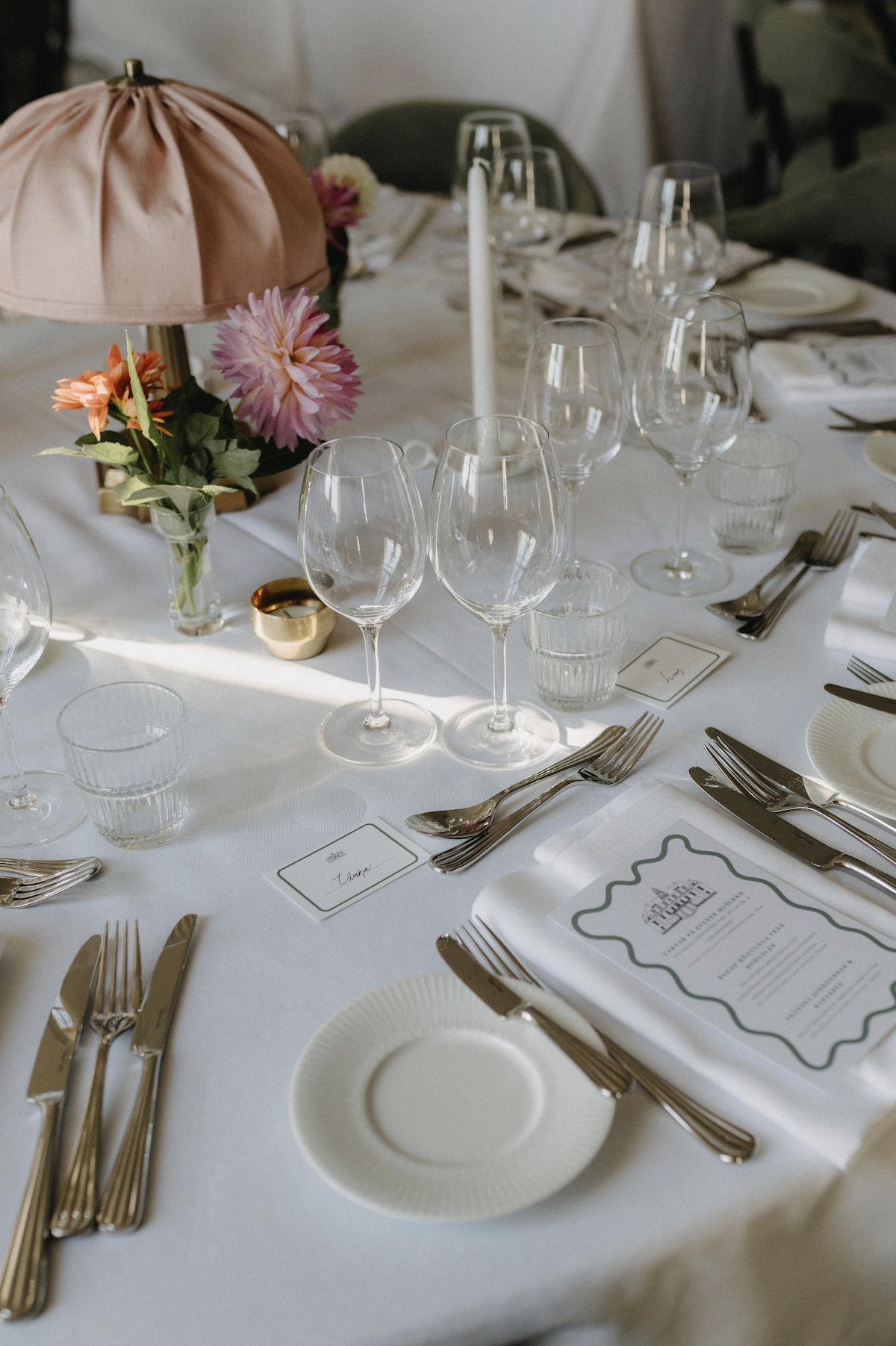


Seating arrangements. How to get your seating arrangements right! For a wedding to be a real success, it’s important to seat the guests at the wedding dinner partly in accordance with tradition, and partly based on who gets on well together and enjoys each other’s company.
Tradition is the primary guide: the closer the family relationship, the better the seating position. In this context, the best seating arrangement is to sit as close to the bride and groom as possible. Also try to mix the bride’s and groom’s relatives, as well as ‘lively’ people with more reserved ones, all to create a pleasant atmosphere throughout the wedding venue and to help the different families get to know one another.
Traditional seating arrangements
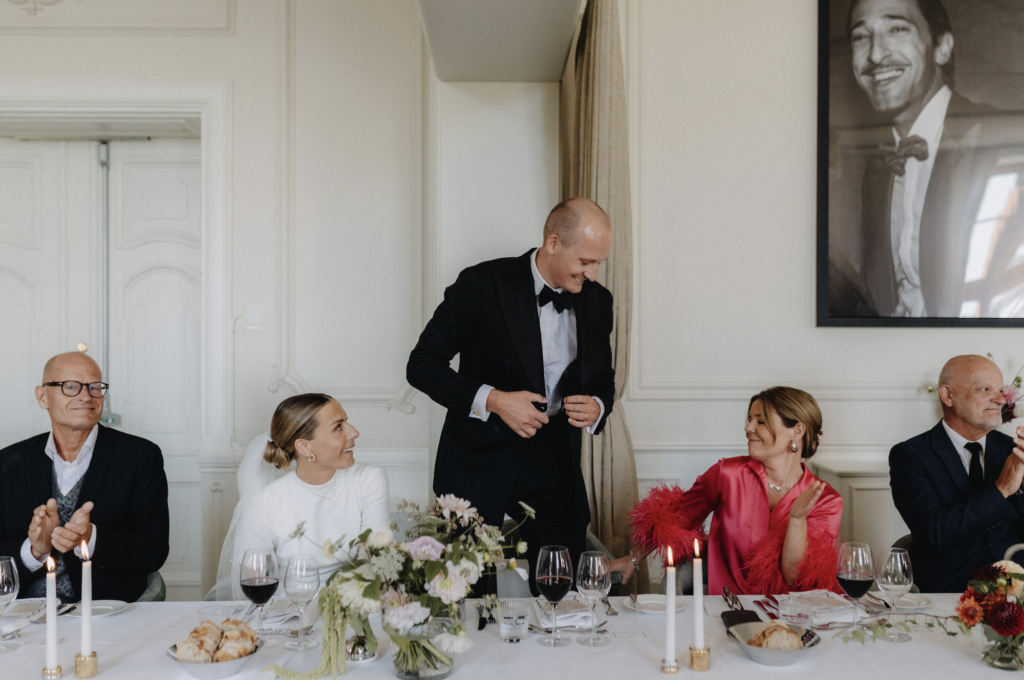
The traditional wedding seating arrangement, based on straightforward family ties, means that the bride and groom sit at the centre of the head table. The bride sits to the right of the groom and the groom, of course, to the left of the bride.
To the bride’s right sits the bride’s father, and to his right sits the groom’s mother. Any male officiant sits to the right of the groom’s mother. To the groom’s left sits the bride’s mother, and to her left sits the groom’s father. Any female officiant sits to the left of the groom’s father. Next come the older close relatives; the older they are, the more prominent their seating position. The older relatives are also usually the ones who care about etiquette and attach importance to sitting in the place of honour. Siblings are usually seated near the bride and groom, though usually not at the table of honour.
Many people wonder what to do when one parent has passed away. In such cases, the most common practice is to seat another older close relative – or someone important to the bride or groom – in the parent’s place, such as an uncle, aunt or cousin.
Another rule is that married couples should never be seated next to each other, apart from the bride and groom, of course. Cohabititing couples who have lived together for a long time are not usually seated together either, as they may be regarded as married. According to traditional etiquette, engaged couples should be seated next to each other; this works well if a couple are newly engaged and have not lived together for long. Or if the couple are due to marry soon. Bridesmaids and groomsmen are usually seated next to one another.
If the bride and groom wish to deviate from the traditional seating arrangements, they are free to do so, according to one rule. It is their day, and on their wedding day, the bride and groom decide what is best. They also decide which guests to invite to the wedding. Relatives and friends just have to accept it!
Non-traditional seating arrangements
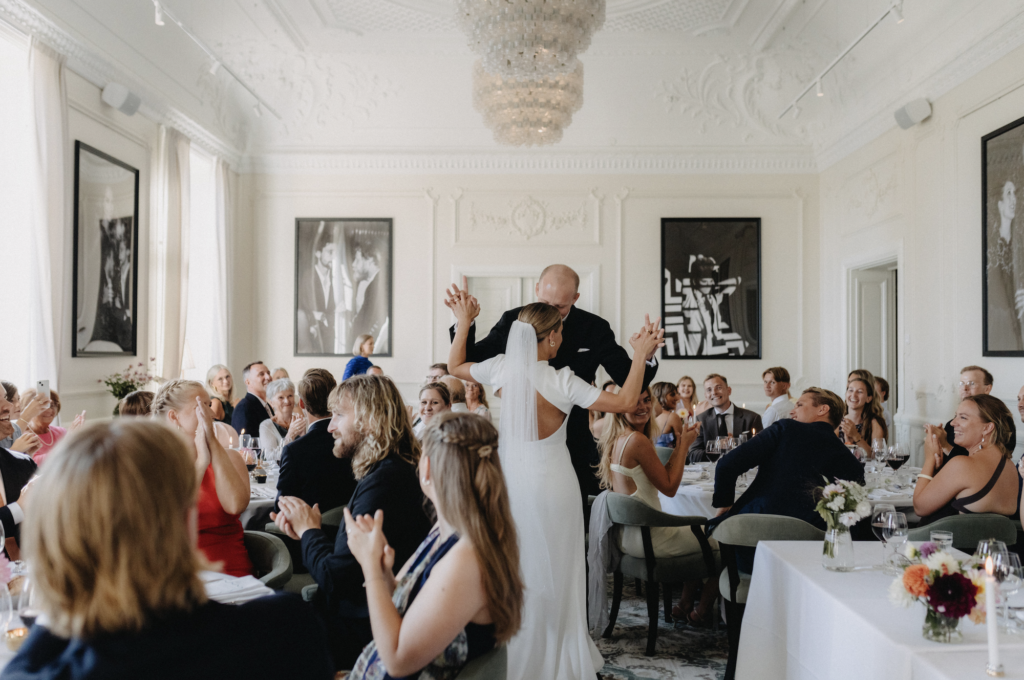
For various reasons, you might want to deviate from the traditional seating arrangements at a wedding. If, for example, your parents are divorced or you have a step-parent whom you consider your closest relative, the seating arrangements can easily become a source of concern.
A good starting point is to try to take everyone’s wishes into account and to consult those involved before finalising the seating plan. Bear in mind that most people are usually willing to accept most things, provided they have been informed and given the chance to have their say first.
As with all etiquette, it is also important to use common sense and consider what is reasonable when deciding on the seating arrangements. Sometimes the traditional seating plan does not work, and an alternative approach is needed. For example, if the parents are not attending the wedding, you could instead have the couple’s closest friends sit closest to them, rather than distant relatives with whom you have no close relationship. Or if the bride or groom isn’t accompanied by their relatives, it might be better to mix things up rather than trying to stick to traditional seating at all costs.
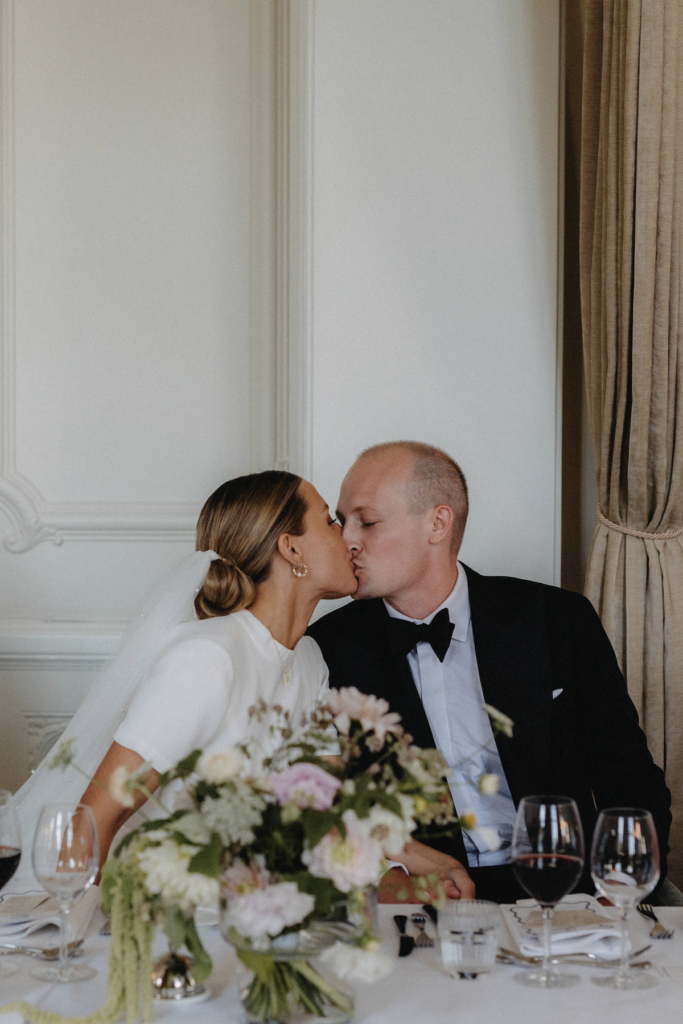
Make it easy for guests to find their seats
Once you’ve decided how you want to arrange the seating plan, the next step is to communicate it to the guests. At a wedding, a clear seating plan at the entrance to the dining room is worth its weight in gold for avoiding crowding and confusion.
- Seating plan: A beautiful board or a frame displaying table numbers and names makes it easy for guests to see where they’re sitting.
- Seating cards: Use cards that match the rest of your wedding theme. It’s a small detail that enhances the atmosphere at the table.
- Flexibility: Remember that the seating plan is never set in stone until the party begins – be prepared for last-minute changes if anyone is unable to attend.
Whether you opt for a traditional or non-traditional seating plan, the aim is to create an atmosphere where your loved ones can enjoy good food and make new acquaintances.
Finally – remember that the wedding is the bride and groom’s day, and they’re the ones who decide on their big day. An unconventional seating plan can sometimes be the best solution and make the celebration just as successful as everyone dreams it will be!
Do you need some help visualising how your guests will be seated? There are several great free tools online, such as Canva, where you can upload your own sketches and visualise how the tables will be arranged in the venue.
Recommended reading
Once you’ve finalised your seating plan, it’s time to ensure your guests have all the information they need during the dinner. Don’t forget to include the seating plan and guest introductions in your programme!
Related articles
-
 Planning
Funding a wedding: Everything you need to know about saving, borrowing and budgeting
How do you plan and fund your wedding? After all, it’s the bride and groom’s big day, so whether you want a big wedding or…
-
 Planning
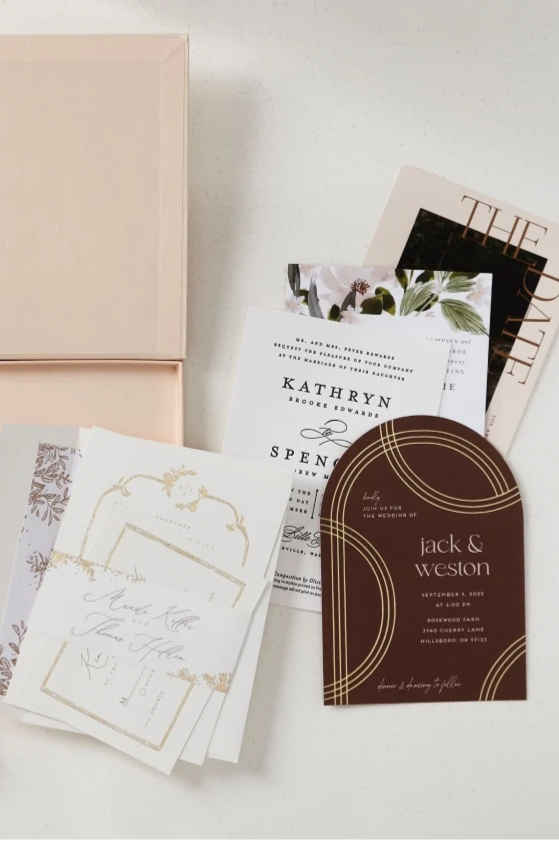
Custom wedding invitations: Create personalised invitations
Are you planning to make your own wedding invitations? We’ll guide you step by step, from choosing materials to writing the text and getting them…
-
 Guests
You’ll definitely be able to sort out that wedding speech – A comprehensive guide with tips and advice
Giving a speech at a wedding doesn’t have to be difficult – here’s how to do it with tips from speechwriter Magnus Alm.
-
 Planning
Does love last a lifetime? The key to a happy marriage
So how do you actually go about becoming one of those couples who rock back and forth in their rocking chairs at the care home?…
-
 Planning
Wedding anniversaries: A complete list for 1–100 years, with names and gift ideas
Wedding anniversaries: See our list from 1 to 80 years, including names, meanings and traditions. We explain what each anniversary is called and how to…