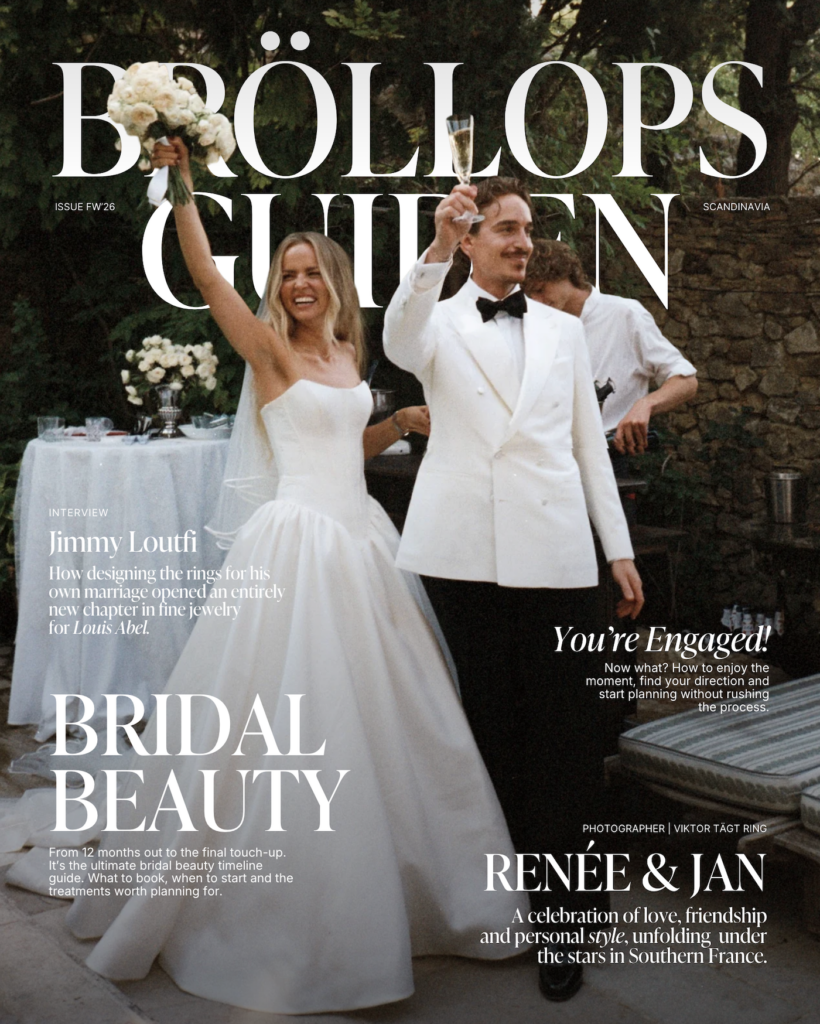
ISSUE FW’26
In our new FW’26 issue, we take you to the south of France and to Renée and Jan’s wedding, which was a celebration of love, friendship and style. We also sit down with Louis Abel founder Jimmy Loutfi for an in-depth interview about how his own wedding rings marked the start of a new chapter in fine jewellery, and look ahead to New York Bridal Fashion Week for the silhouettes, details and ideas that will set the tone for the coming season.
The Bridal Edit
Wedding Dress Silhouettes & Cuts
What separates a basque waist from a drop waist? Compare waistlines, necklines and skirts, with practical checks to use at your fitting.
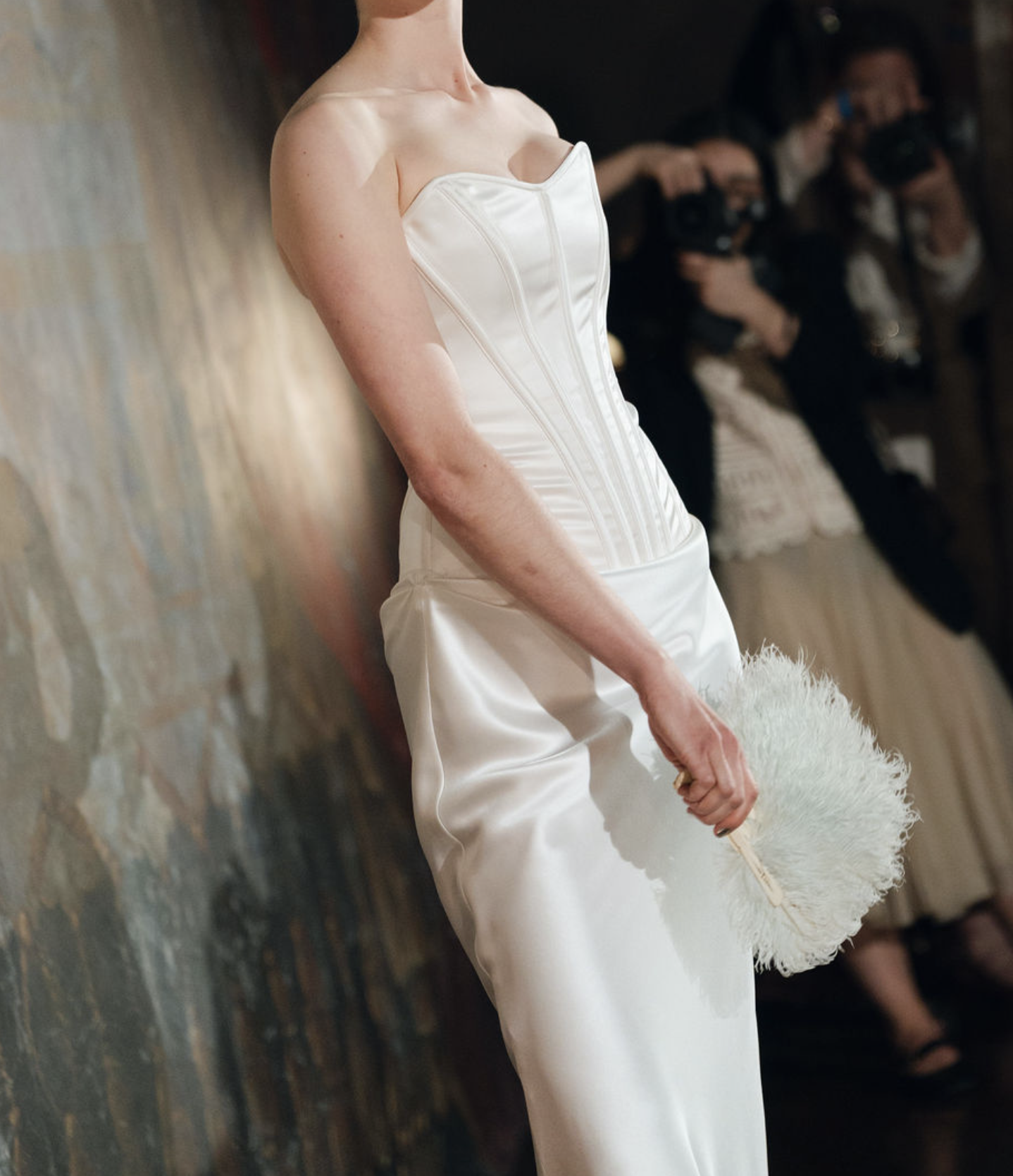


The waistline, bodice and neckline shape a wedding dress as much as the fullness of its skirt. In modern bridal fashion, different cuts give a gown its structure. Look at the placement of the seams and the way the fabric falls before choosing a silhouette.
This guide explains basque and drop waists, cut-outs, lace and square necklines. Use it at your fitting: compare dresses with a similar overall shape, then assess each one standing, sitting and moving.
Basque Waist – A V-Shaped Waistline
A basque waist typically has a waistline that dips into a defined V at the front. The V is at the join between the bodice and skirt, not at the neckline.
Look for: The depth of the V and the way the bodice seams meet the waistline. Try comparing two dresses with similar skirts but different depths at the front waist.
At the fitting: Sit down and check whether the point or seams press against your abdomen. Ask to see the lining and internal construction of the bodice.
Wedding Dresses with Cut-Outs
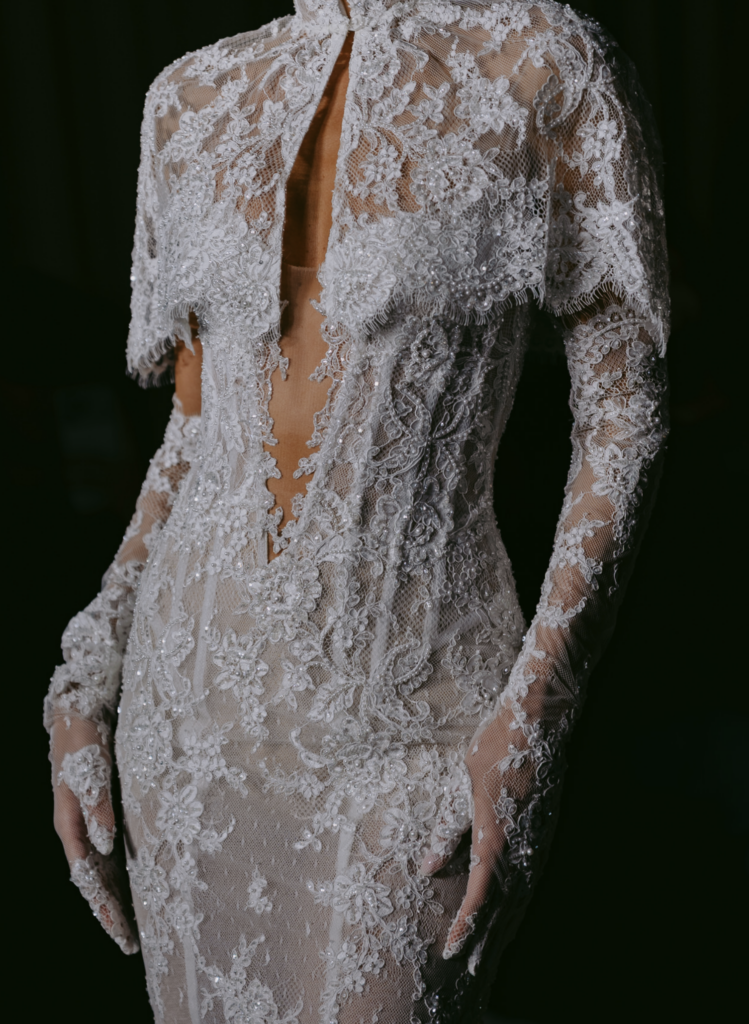
Cut-outs can sit at the sides, front or back of a dress. Some expose skin; others are covered with sheer tulle. They do not have to be paired with a plunging neckline.
Check: Raise your arms and sit down. See whether the edges stay in place, and try the dress with the underwear you are considering.
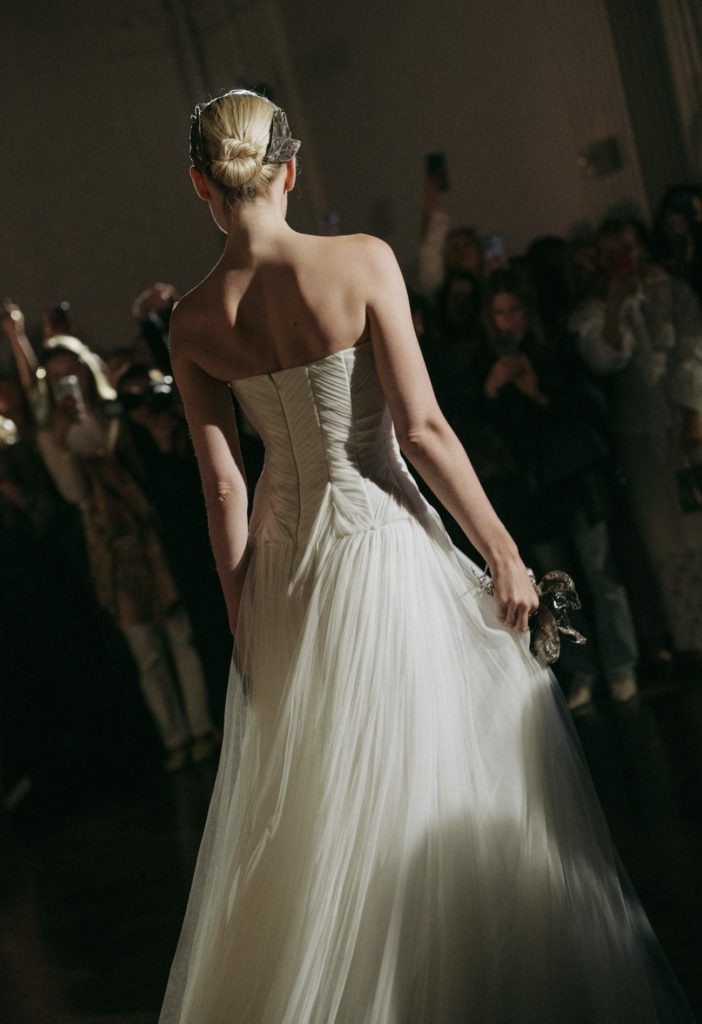
Architectural Silhouettes
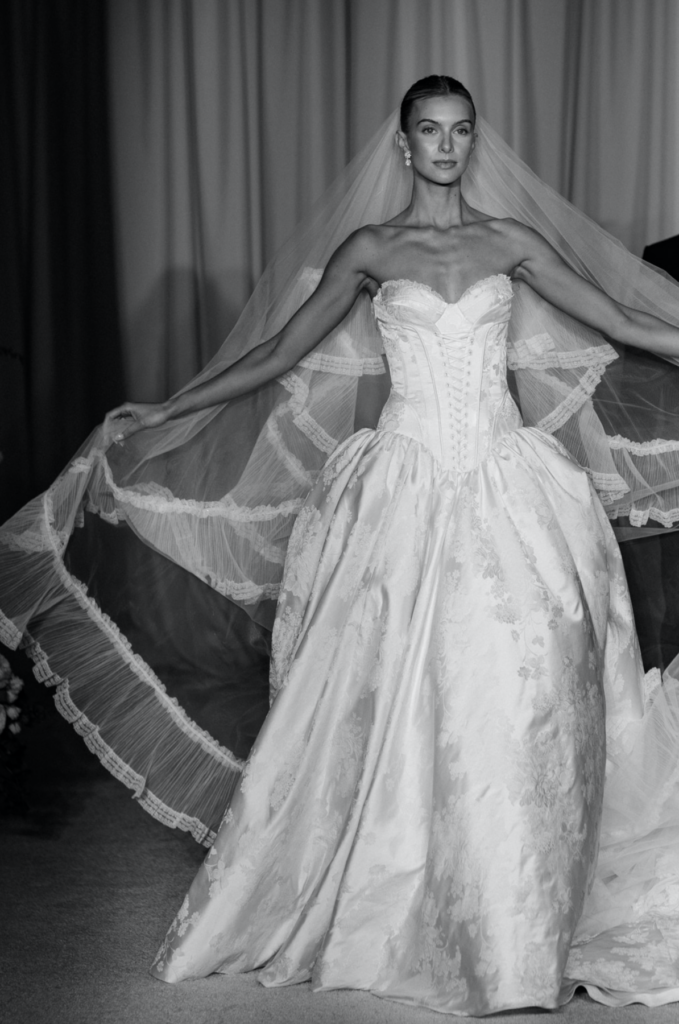
Here, architectural describes a silhouette with an emphasis on construction, such as pronounced folds or a sculptural bodice. The dress may also feature lace or other embellishment. The term does not tell you whether it has pockets.
Look for: How the fabric holds its shape as you move. Ask which sections are structured and whether alterations would affect the folds or seams.
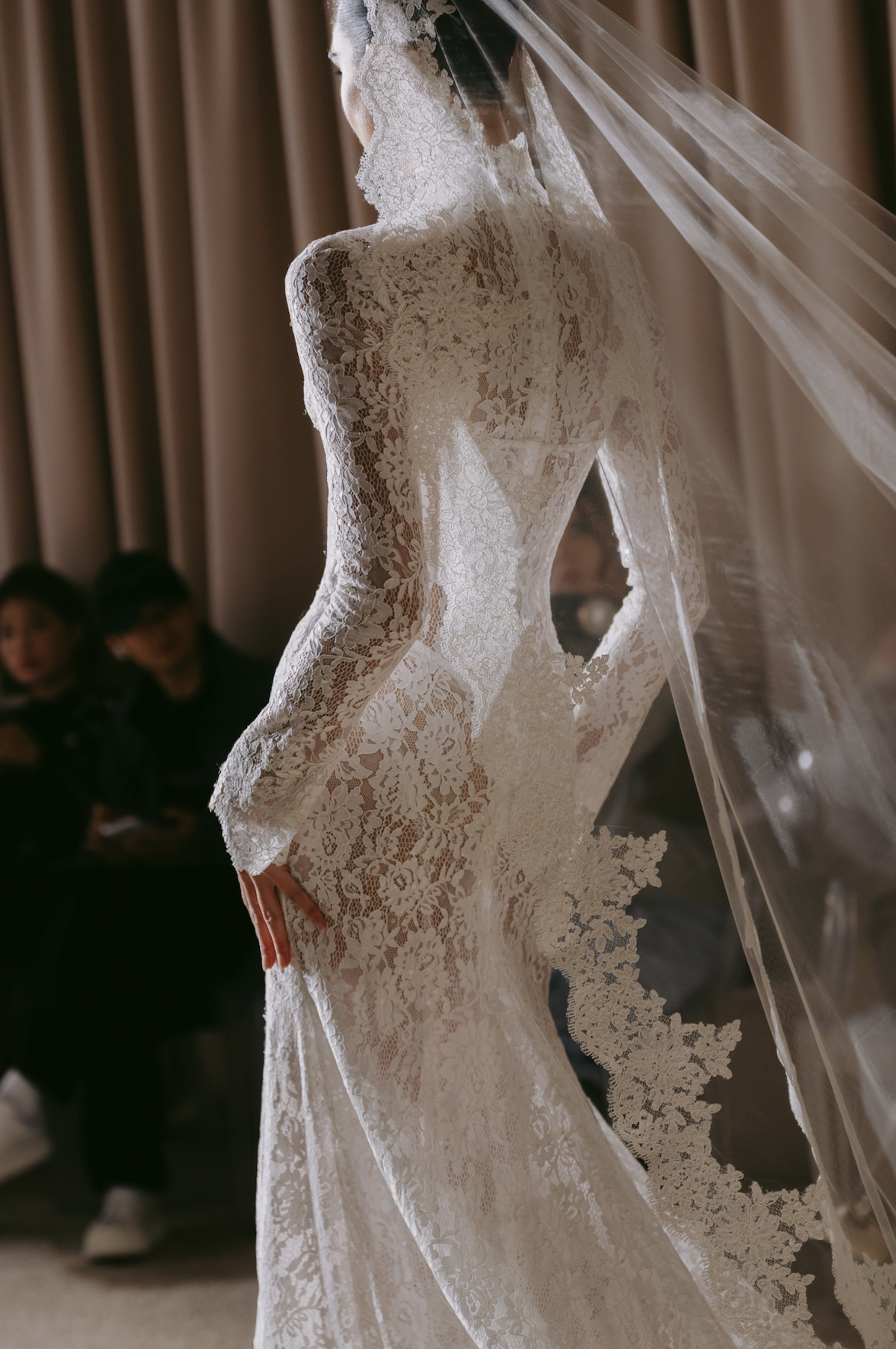
Large Floral Motifs in Lace
Large floral motifs create a different pattern from small, closely spaced flowers. Compare the lace from a little further away, and look at how the motifs meet across the seams.
Check: View the dress with the lining you intend to wear. Assess its transparency and ask how the pattern could be preserved if the dress needs taking in or shortening.
Square necklines
A square neckline has a relatively straight front edge and defined corners towards the straps or shoulders. Its depth and width vary between designs.
At the fitting: Check where the edge sits in relation to your collarbones. Lean forwards and raise your arms to see whether the neckline and straps stay where you want them.
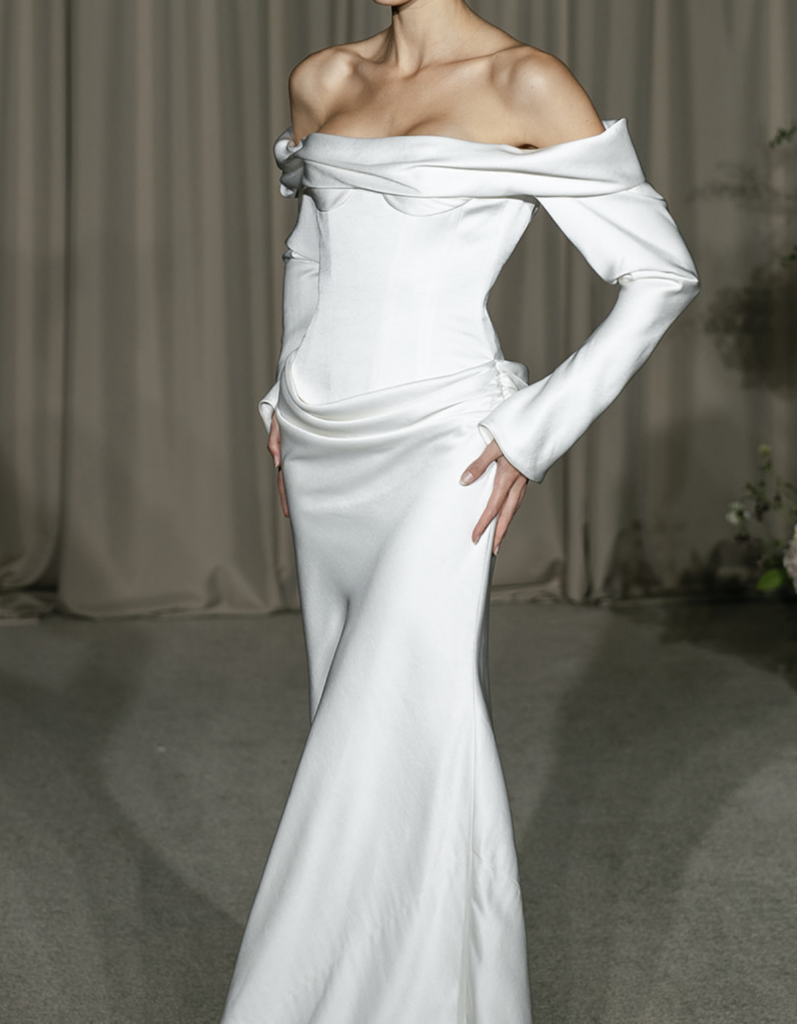
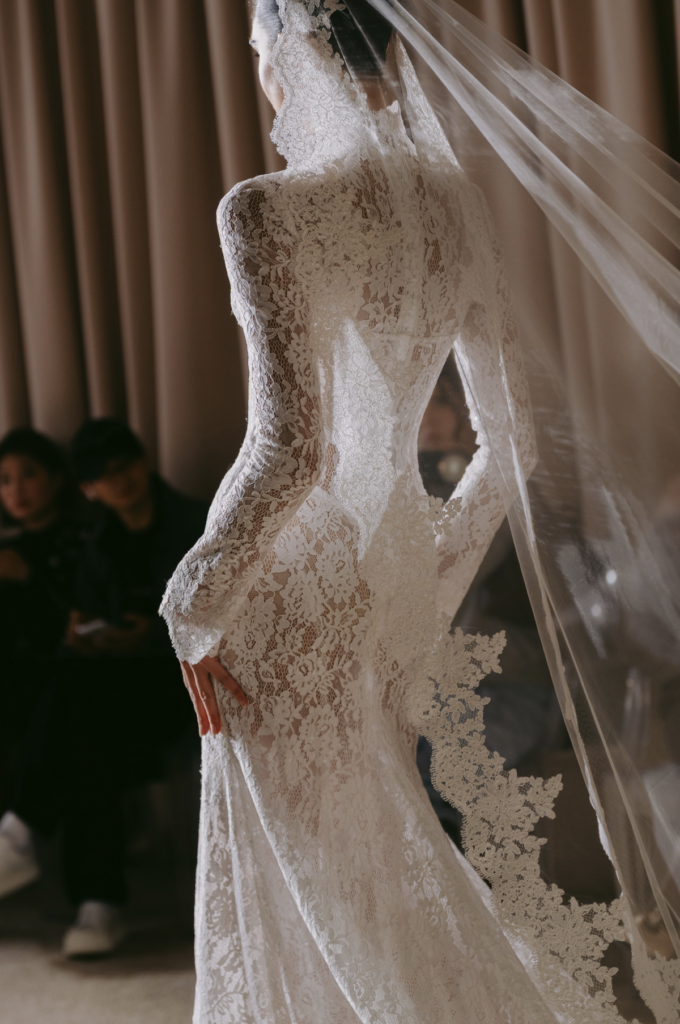
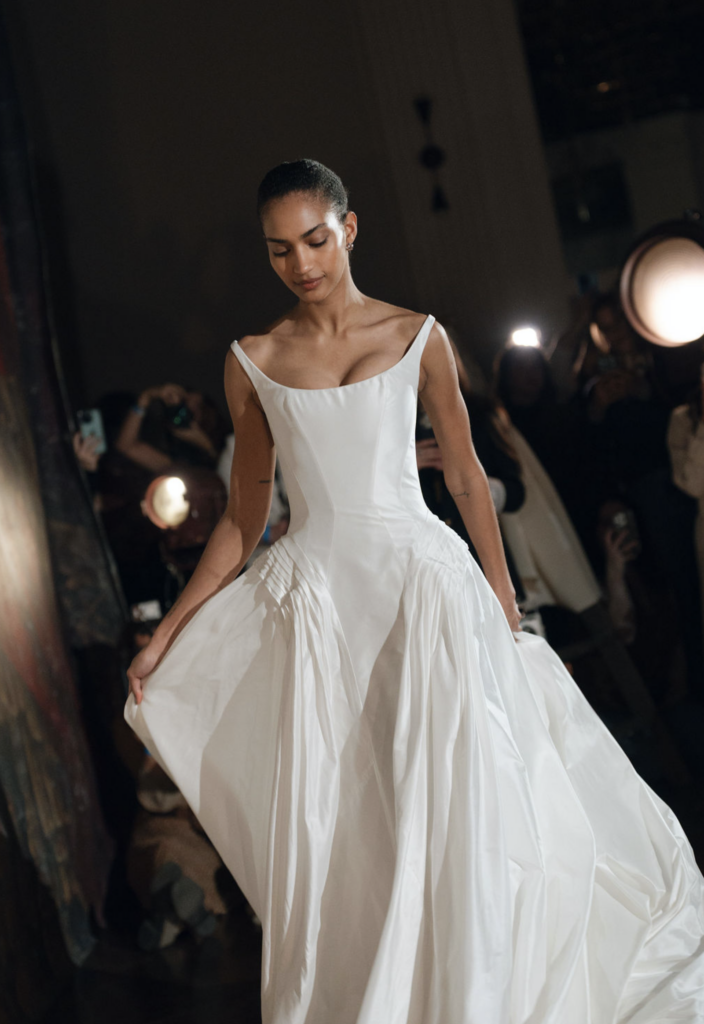
Compare a similar overall shape with different details. A change in waist seam, lining or fabric structure can alter the way a dress looks.
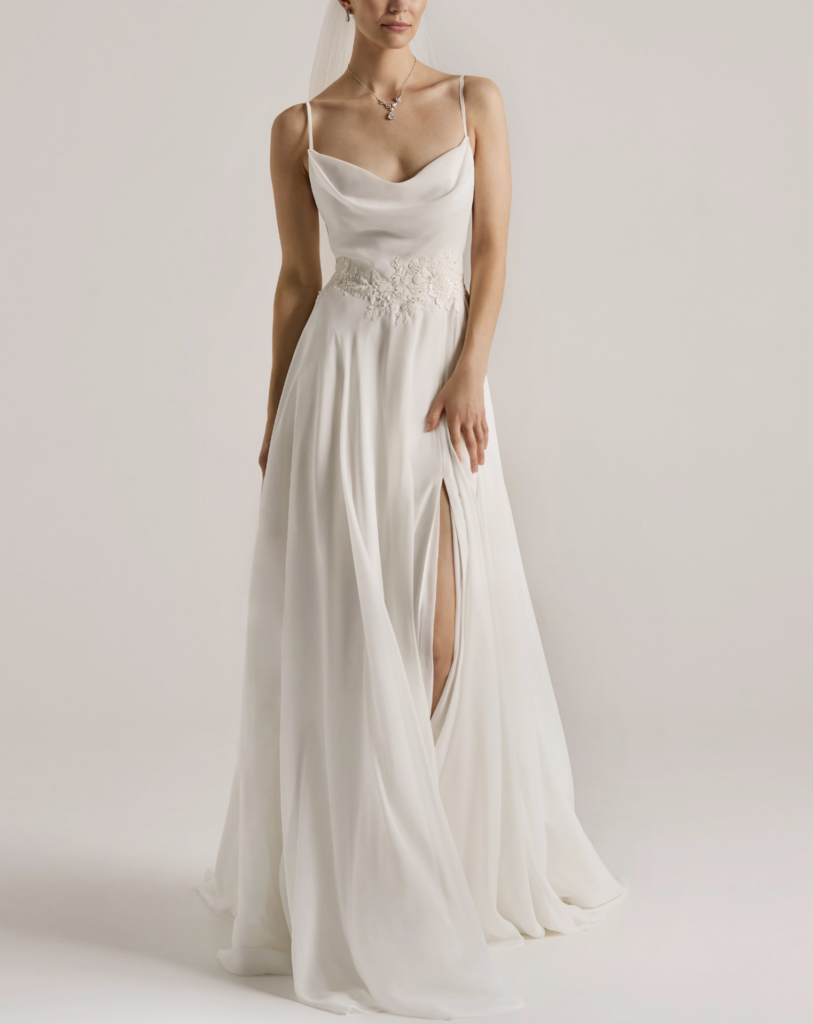
Fitted Dresses with a Slit
A fitted dress can combine a slit with draping across the waist. Look at where the slit begins and how it opens when you walk and sit down.
Check: Take your usual stride and try a step if one is available. A high slit does not guarantee room to move; assess the width of the skirt and its lining too.
Drop Waist
A drop waist dress has its waist seam below the natural waist. The seam need not form a V at the front: drop waist describes its position, whereas basque waist describes the pointed shape.
At the fitting: Check where the lowered seam sits when you are seated. Compare it with a dress that has a similar skirt and a higher waist seam.
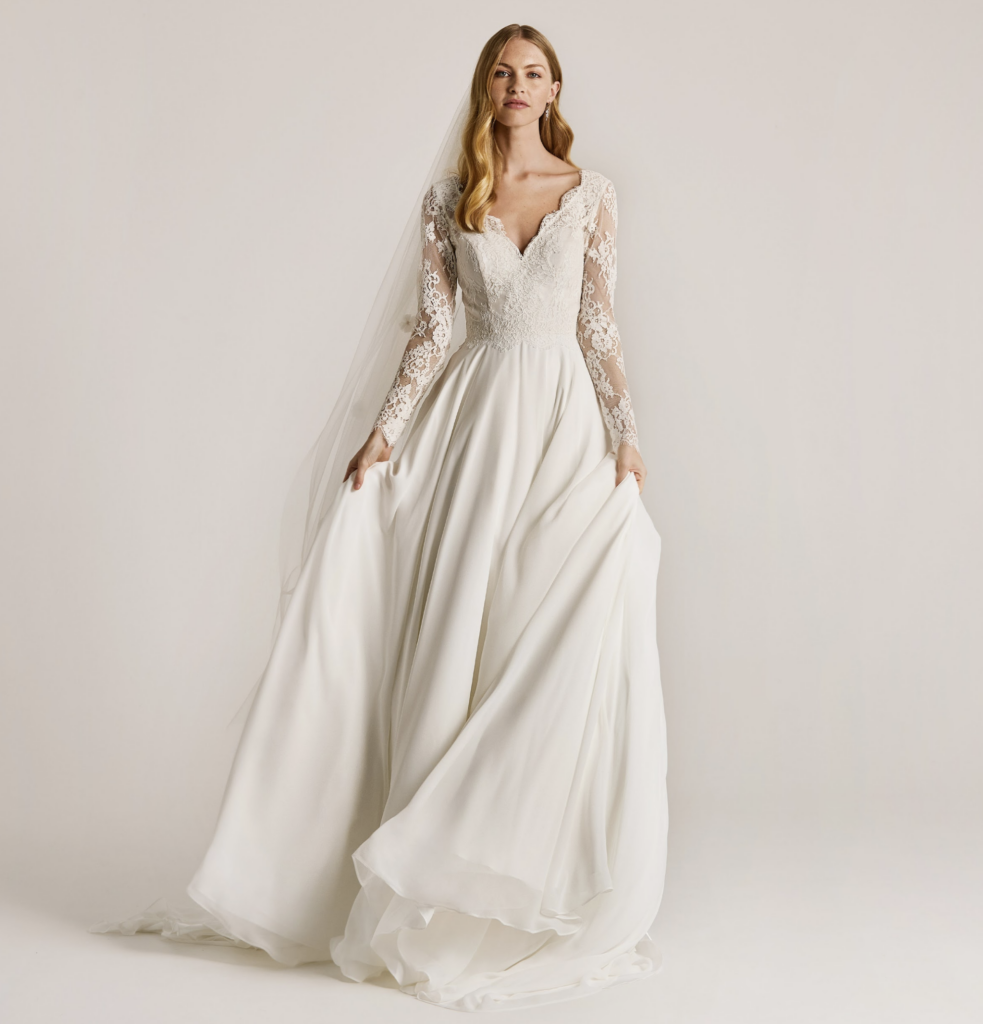
Airy Dresses
A skirt made from light layers can be paired with a lace bodice. Examine the whole dress, including the underskirt, rather than judging its weight by the outer layer.
Check: Walk around and sit down with all the layers in place. Ask whether any layers can be altered and what that would mean for the shape and transparency.