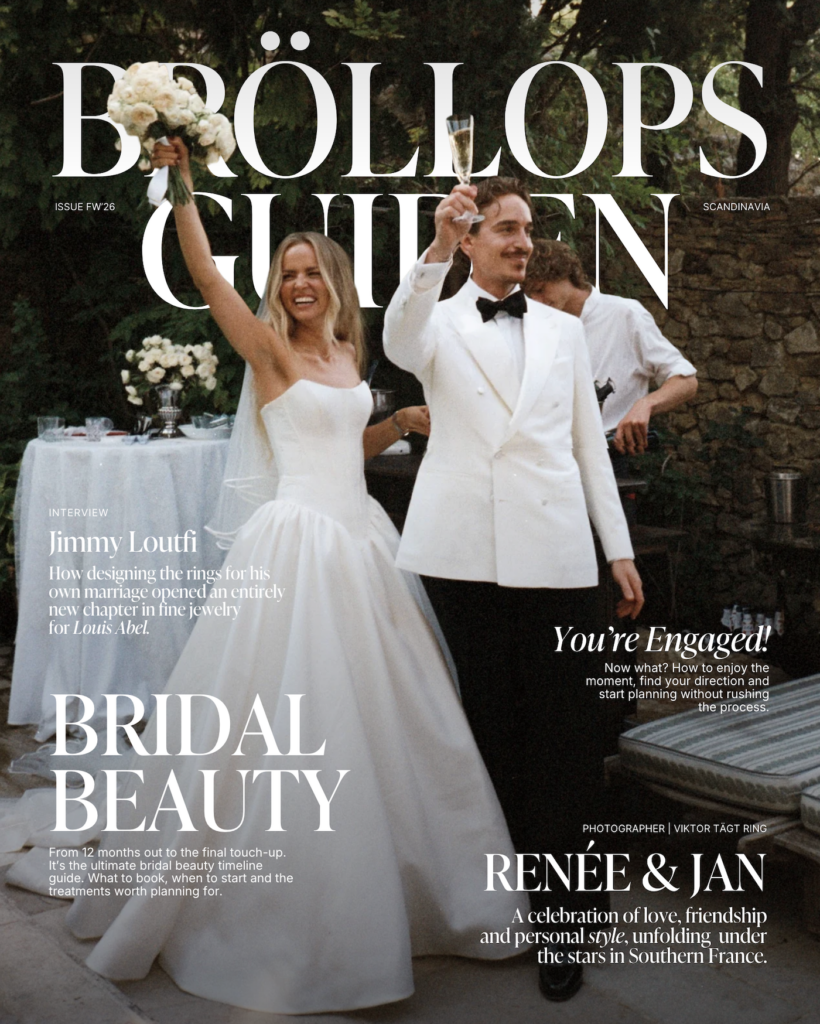
ISSUE FW’26
In our new FW’26 issue, we take you to the south of France and to Renée and Jan’s wedding, which was a celebration of love, friendship and style. We also sit down with Louis Abel founder Jimmy Loutfi for an in-depth interview about how his own wedding rings marked the start of a new chapter in fine jewellery, and look ahead to New York Bridal Fashion Week for the silhouettes, details and ideas that will set the tone for the coming season.
The Bridal Edit
Bridal Fashion Trends – A Selection of Styles
A selection of bridal styles with practical fitting advice, from simple cuts and short dresses to lace, pointed waistlines and cat-eye bodices.


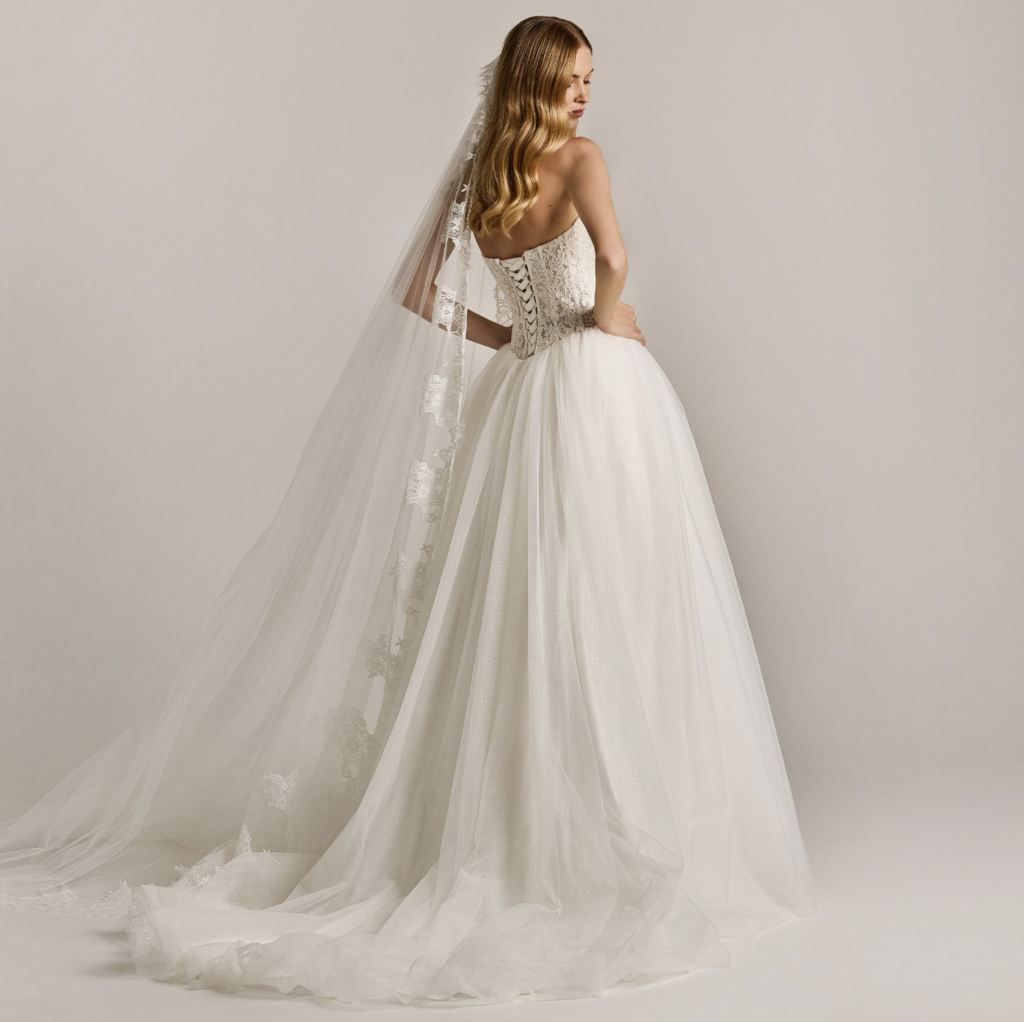
When trying on wedding dresses, consider personal style alongside contemporary design without letting trend labels make the decision. This selection ranges from simple gowns with little embellishment to short dresses and large floral motifs.
This part of the guide explains the details that distinguish these styles and what to check at a fitting. It is a selection of ideas, not a ranking of the most popular wedding dresses.
1. ‘Old Money’ aesthetics and ‘Quiet Luxury’ in modern bridal fashion
The labels ‘Old Money’ and Quiet Luxury describe an understated approach with little visible embellishment. For a wedding dress, that can mean drawing attention to the cut and fabric rather than decoration.
Characteristics: Look for clean lines and little sparkle, perhaps in satin or mikado. Satin describes a weave, not a particular fibre or quality grade. Ask what the fabric is made from and watch how it falls as you move.
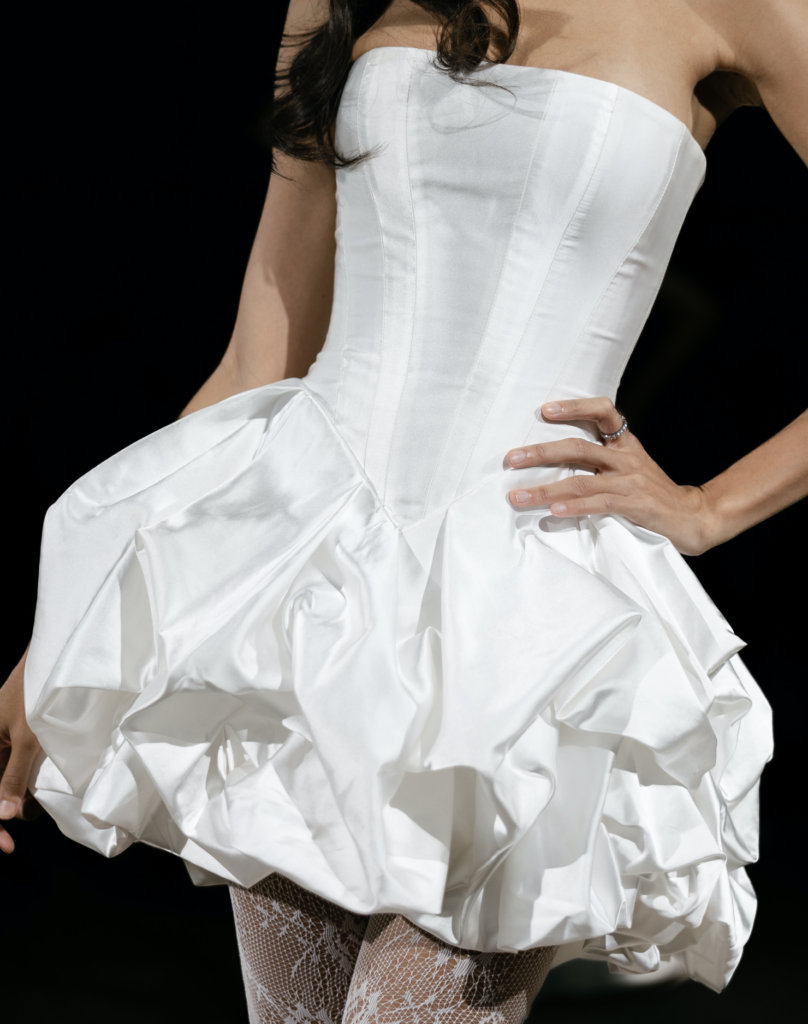
2. Bridal Minis – Short wedding dresses
Short wedding dresses, often called Bridal Minis, are an option for both the ceremony and the reception. You can wear one throughout the day or choose it as a second outfit.
Features: A short dress puts your shoes on show and could also be worn to a brunch the following day. There is no age limit to the style. Sit down, try some steps and practise a few dance moves to assess the hemline and room to move.
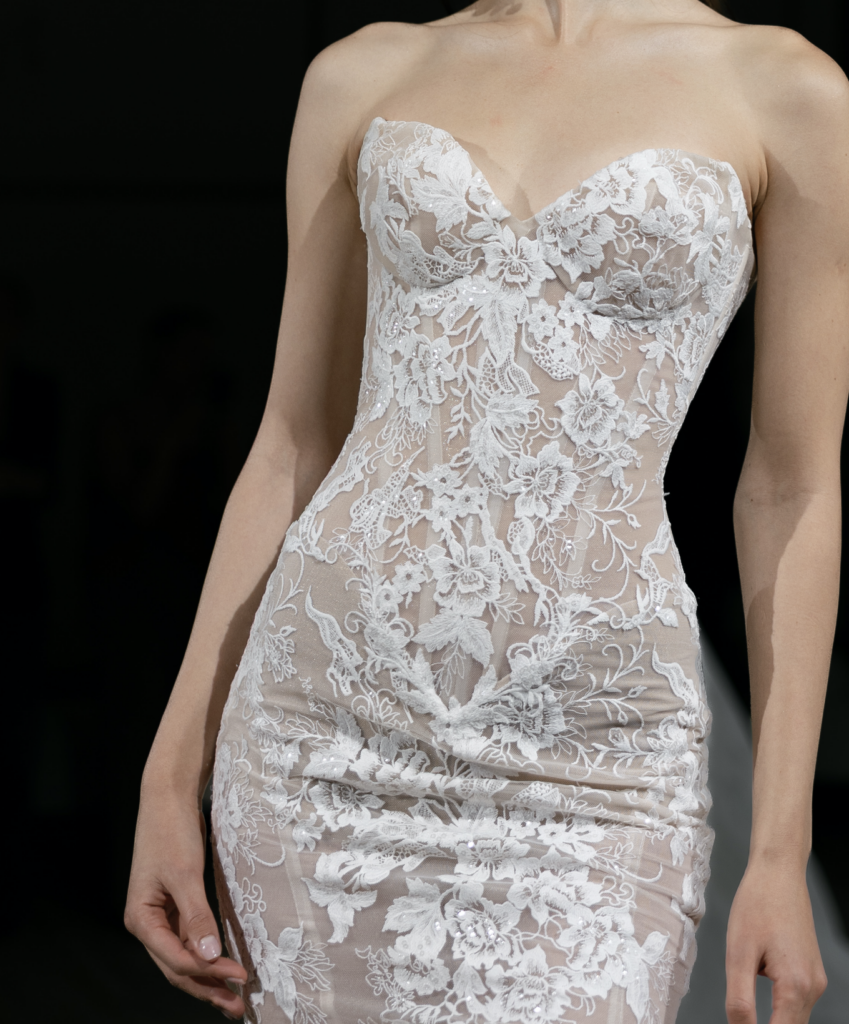
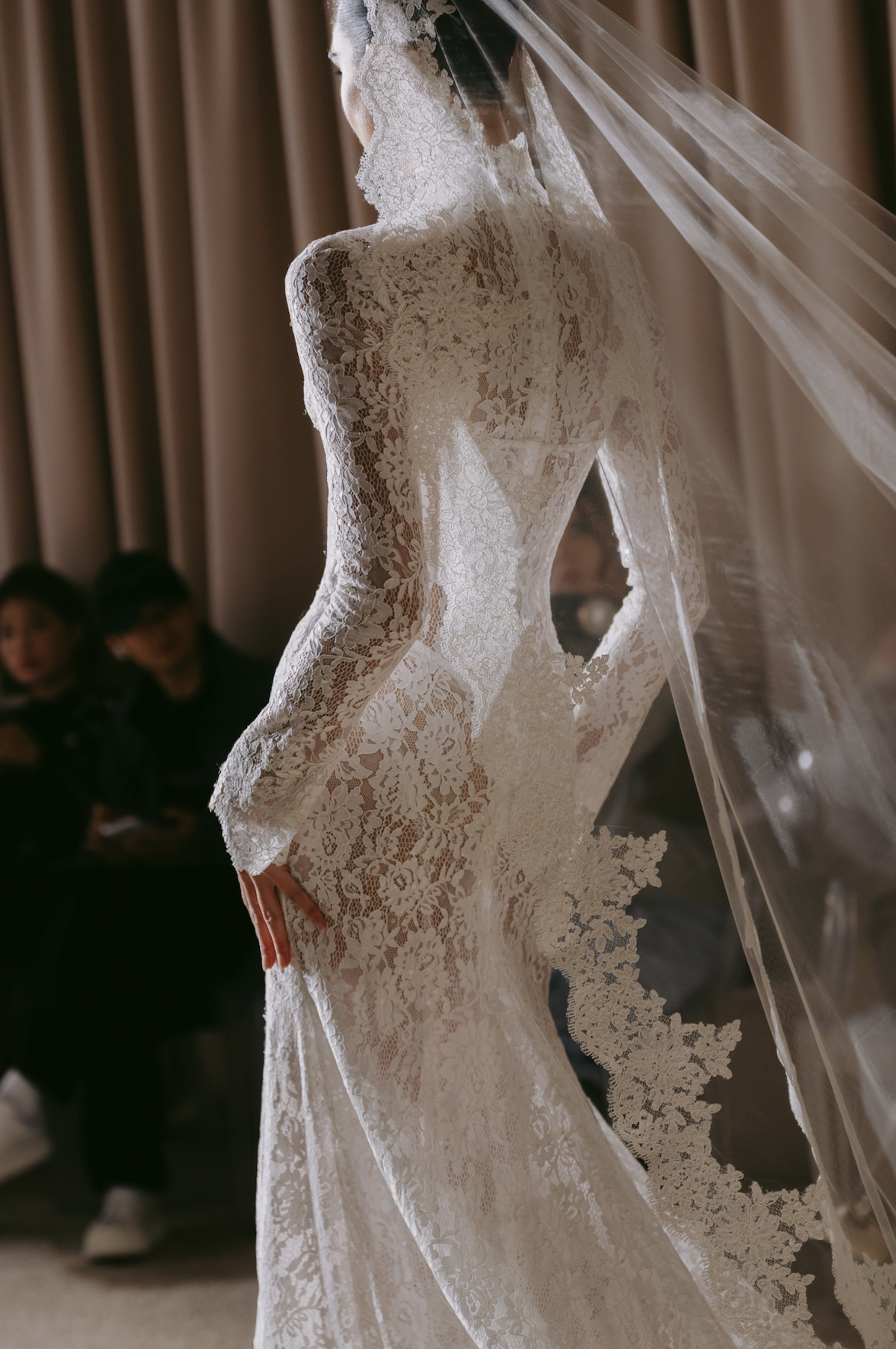
3. Large Florals & All-Over Lace
Large floral motifs and lace covering the whole dress offer different approaches to pattern. Compare the size and spacing of the motifs rather than choosing by the trend label alone.
Features: Open areas in the lace can reveal skin or the lining beneath. Ask to see the dress with the intended lining and decide how much transparency you want.
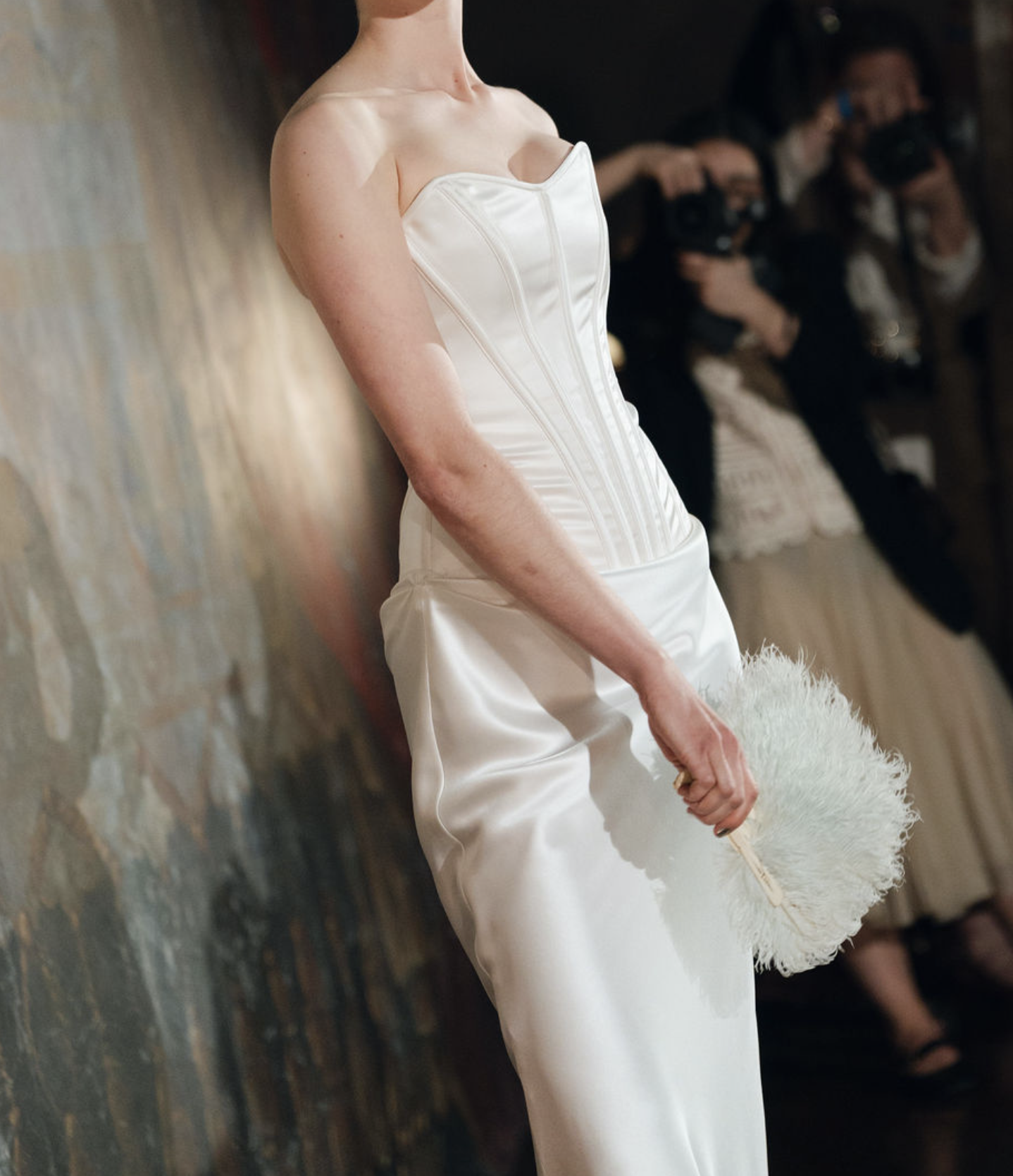
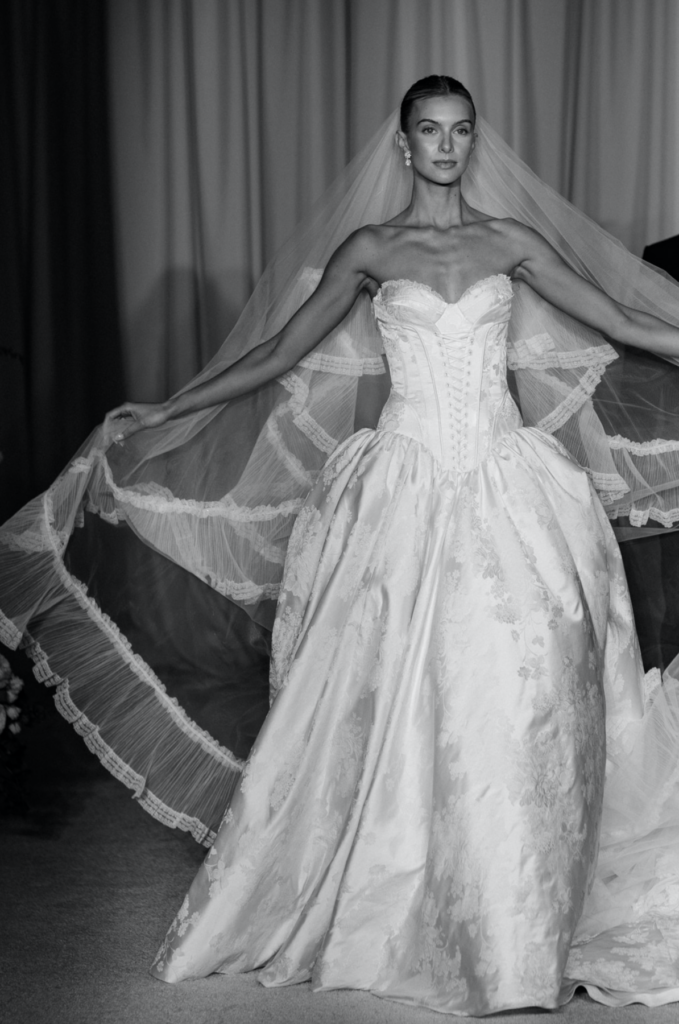
4. Basque Waist – The Pointed Waistline
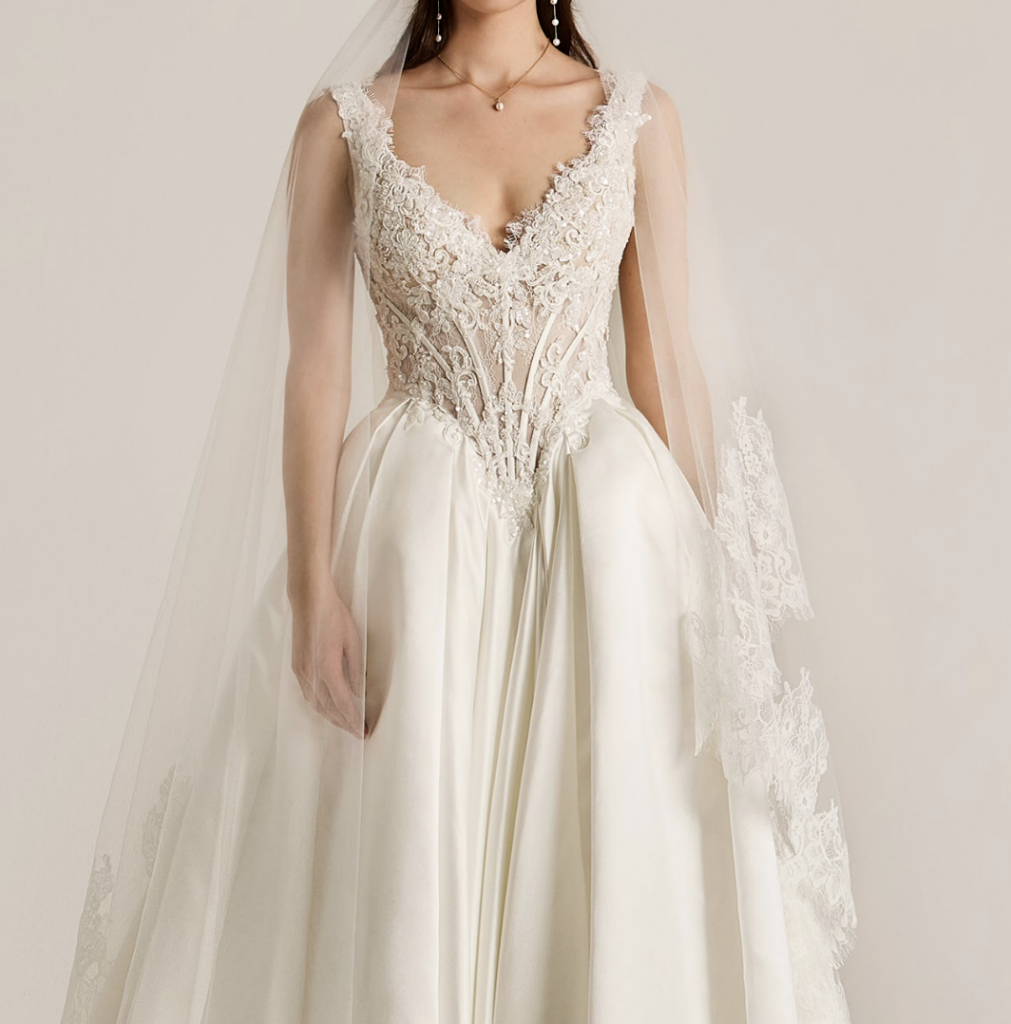
A Basque Waist dips into a V-shaped point at the front. Look at the shape of the seam between the bodice and skirt, rather than simply how low it sits.
Features: The pointed waistline can make the bodice appear longer and emphasise an hourglass silhouette. The effect depends on the overall cut. Compare it with a straight, dropped waistline and check how the bodice feels when you sit down.
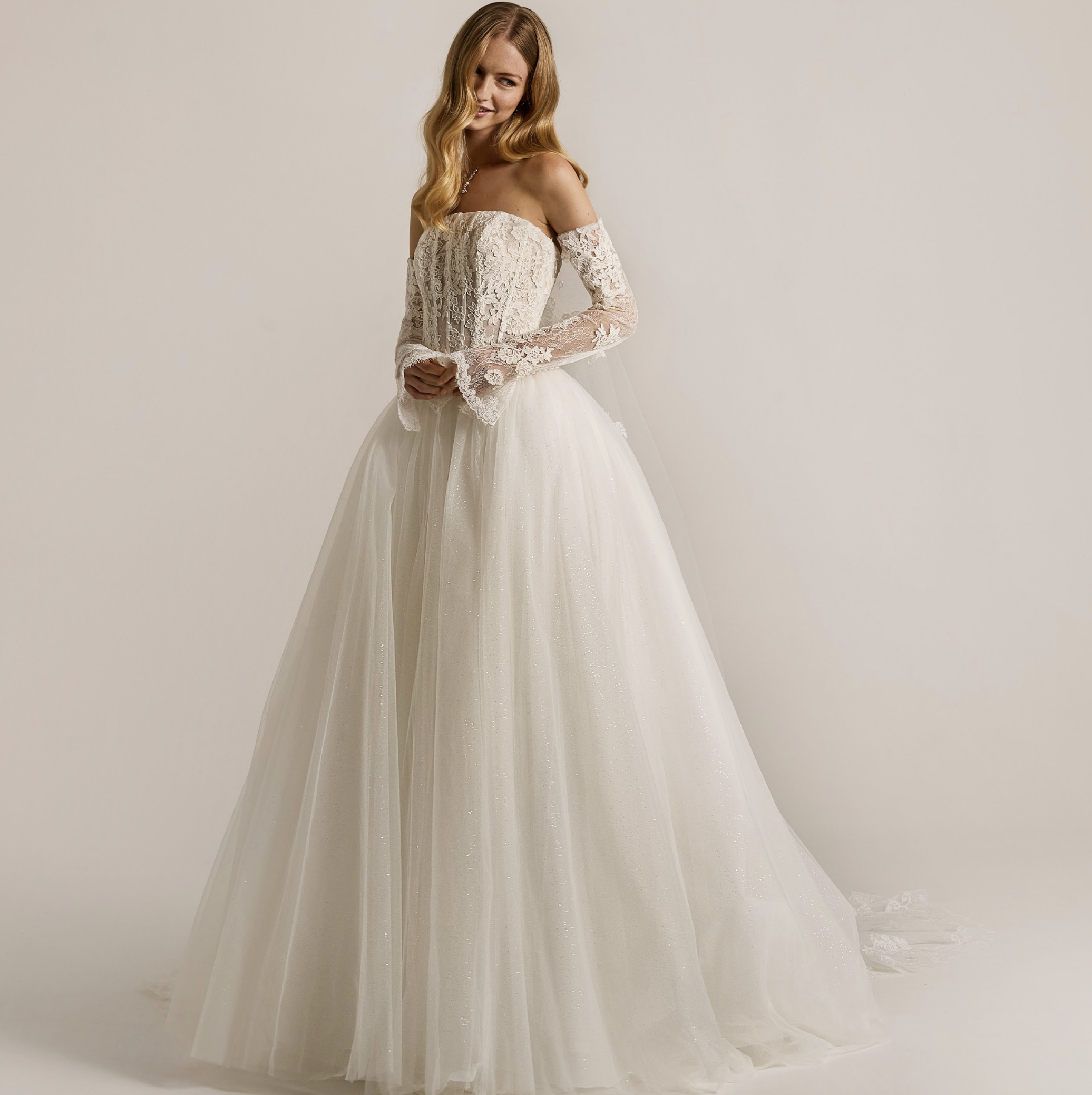
5. Eye-Catching Sleeves & Bridal Jackets
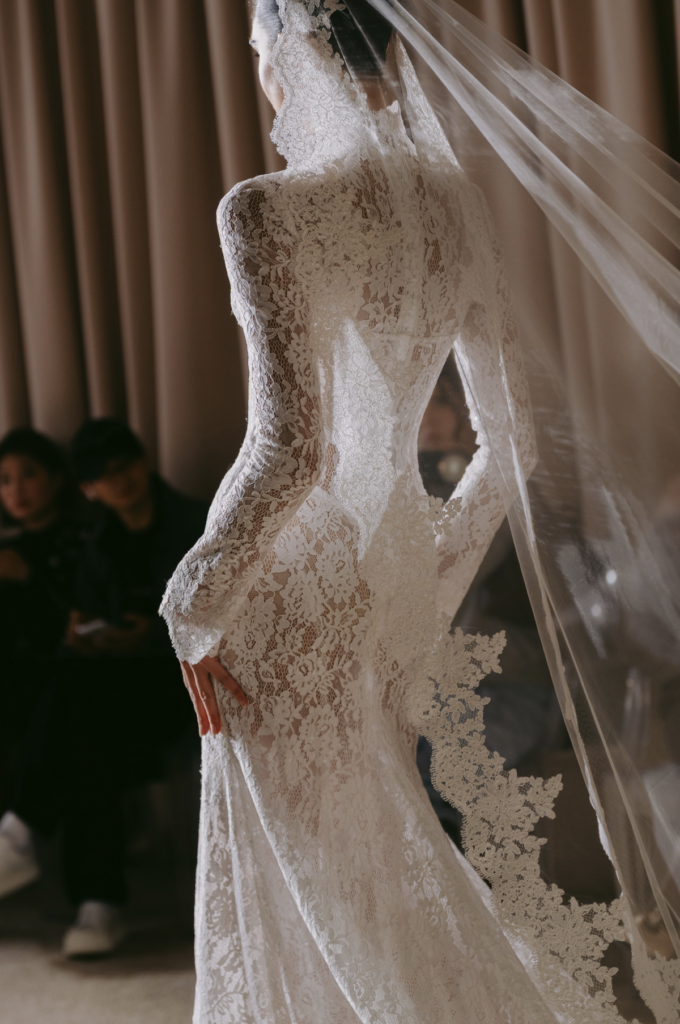
Lace sleeves, full sleeves and separate bridal jackets offer different ways to cover your shoulders or change an outfit. Check which elements are actually detachable on the dress you are trying.
Features: Detachable pieces let you change the outfit between the ceremony and reception. Test the fastenings, raise your arms and try taking the jacket off and putting it back on. For a winter wedding, ask what outerwear you will need for time spent outdoors.
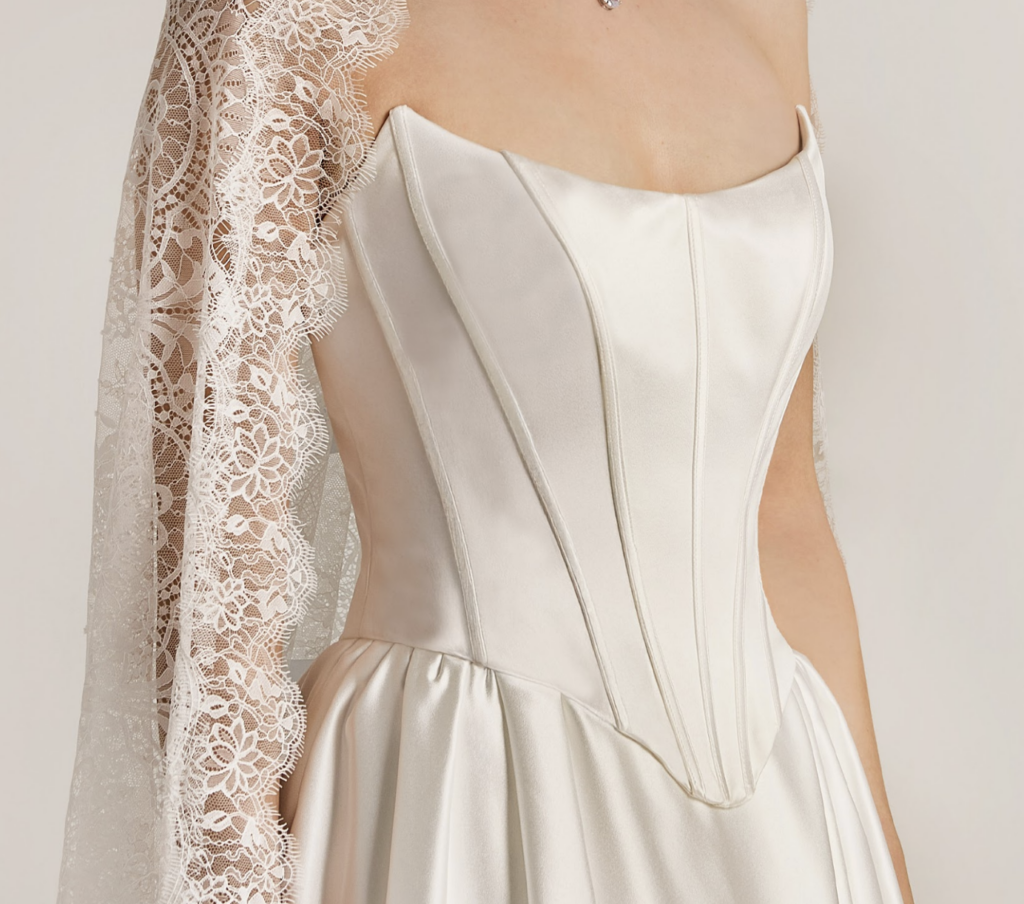
6. Cat-Eye Bodice – The Sculpted Bodice
A cat-eye neckline has pointed outer edges that angle upwards on either side of the bodice. The name describes the neckline, not the standard of construction, support or fabric.
Features: The upward points create a defined outline around the bust. At the fitting, check whether the edge sits close without digging in, including when you lean forwards or raise your arms.
Read the next instalment of The Bridal Edit
Interested in adding layers? Read more about lace and layering for your bridal outfit.